Author Archives: nibirudb

Nannar Quotes From Zecharia Sitchin’s Books

SEE SITCHIN’S EARTH CHRONICLES, ETC.:

(gods in bluemixed-breed demigods in teal…)


Enlil...contemplated favorably the attributes of Nannar:

         “A firstborn…of beautiful contenance,

         perfect of limbs, wise without compare…”

The people of Ur spoke of Nanna’s“Boat of Heaven, his “bird”, his flying machine:

         “Father Nannar, Lord of Ur…”


          “Whose glory in the sacred Boat of Heaven is…

         Lord, firstborn of Enlil.

         When in the Boat of Heaven thou ascendeth,

         Thou art glorious.

         Enlil hath adorned thy hand

         With a scepter everlasting

         When over Ur in the Sacred Boat thou mountest…”

Pyramid Wars:

Enki spoke out strongly against the idea, urging steps to stop Nergal, for the use of the weapons, he pointed out,

         “the lands will make desolate, the people will make perish…”

Nannar and Utu wavered as Enki spoke, but Enlil and Ninurta were for decisive action. And so with the Council of the Gods was in disarray, the decision was left to Anu.

Nergal had already ordered the priming of“the seven awesome weapons” with their “poisons.”,

         “Anu, lord of the gods, on the land had pity…”

It was then that Ninurta, attempting to dissuade Nergal from indiscriminate annihilation, used words identical to those attributed in the Bible to Abraham when he tried to have Sodom spared:

         “Valiant Era (Nergal),

         Will you the righteous destroy with the unrighteous?

          Will you destroy those who have against you sinned

          together with those who against you have not sinned?…”

The two gods argued back and forth on the extent of the destruction. More than Ninurta, Nergal was consumed by personal hatred:..he shouted

        “I shall annihilate the son (Nabu),and let the father (Marduk) bury him;

         then I shall kill the father, let no one bury him…”

Ninurta finally swayed Nergal.

        “He heard the words spoken by Ishum (Ninurta);

         the words appealed to him as fine oil…”

Agreeing to leave alone the seas, to leave Mesopotamia out of the attack, he formulated a modified plan: the destruction will be selective..to destroy the cities where Nabu might be hiding…to deny Marduk the greatest prize—the Spaceport,

         “the place from where the Great Ones ascend…”


         “From city to city an emissary I will send;

         The son, seed of his father, shall not escape;

         His mother shall cease her laughter…

         To the place of the gods, access he shall not have:

         The place from where the Great Ones ascend I shall upheaval. …”

Wasting no more time, Nergal then urged Ninurta that the two of them go at once into action:

         “Then did the hero Erra (Nergal) go ahead of Ishum (Ninurta),

         remembering his words; Ishum too went forth,

         in accordance with the word given, a squeezing in his heart…”

Their first target was the Spaceport, its command complex hidden in the “Mount Most Supreme,” its landing fields spread in the adjoining great plain:

         “Ishum to Mount Most Supreme set his course;

         The Awesome Seven, (nuclear weapons) without parallel, trailed behind him.

         At the Mount Most Supreme the hero arrived;

         He raised his hand–the mount was smashed;

         The plain by the Mount Most Supreme he then obliterated;

         in its forests not a tree-stem was left standing…”

So with one nuclear blow the Spaceport was obliterated…Now it was the turn of Nergal...Guiding himself through the Sinai peninsula to the Canaanite cities by following the King’s Highway, Erra upheavaled them.

The words employed by theErra Epic” are almost identical to those used in the biblical tale of Sodom and Gomorrah:

         “Then, emulating Ishum, Erra the King’s Highway followed.

         The cities he finished off, to desolation he overturned them.

         In the mountains he caused starvation, their animals he made perish…”

The verses that follow may well describe the creation of the new southern portion of the Dead Sea…:

         “He dug through the sea, its wholeness he divided.

         That which lives in it, even the crocodiles he made wither.

         As with fire he scorched the animals, banned its grains to become as dust…”

We find descriptions and recollections of the nuclear upheaval in other texts as well:

         “Lord, bearer of the Scorcher that burnt up the adversary;

         Who obliterated the disobedient land;

         Who withered the life of the Evil Word’s followers;

         Who raised stones and fire upon the adversaries…”

In a Babylonian text in which one king recalls the momentous events that had taken place “in the reign of an earlier king.”

         “At that time, in the reign of a previous king, conditions changed.

         Good departed, suffering was regular.

         The Lord (of the gods) became enraged, he conceived wrath.

         He gave the command: the gods of that place abandoned it…

         The two, incited to commit the evil, made its guardians stand aside;

         its protectors went up to the dome of heaven…”

The“Khedorlaomer Text”, which identifies the two gods by their epithets as Nergal and Ninurta, tells it this way:

         Enlil, who sat alone in loftiness, was consumed with anger.

         The devastators again suggested evil;

         He who scorches with fire (Ishum / Ninurta)

         and he of the evil wind (Erra / Nergal) together performed their evil.

         The two made the gods flee, made them flee the scorching…”

The target, from which they made the gods guarding it flee, was the Place of the Launching:

         “That which was raised towards Anu to launch they caused to wither;

         Its face they made fade away, its place they made desolate…”

Thus was the Spaceport, the prize of which so many Wars of the Gods had been fought, obliterated: the Mount within which the controlling equipment was placed was smashed; the launch platforms were made to fade off the face of the earth; and the plain whose hard soil the shuttle craft had used as runways was obliterated, and not even a tree left standing.

But the deed done by Nergal and Ninurta had not gone unrecorded, for it turned out to have a most profound effect on Sumer, its people, and its very existenceThe nuclear explosion gave rise to an immense wind, a radioactive wind, which began as a whirlwind:

         “A storm, the Evil Wind, went around in the skies…”

The desolation caused by the catastrophe is then described vividly, by such verses as these:

         “Causing cities to be desolate, (causing) houses to become desolate;

         Causing stalls to be desolate, the sheepfolds to be emptied;

         That Sumer’s oxen no longer stand in their stalls,

         that its sheep no longer roam in its sheepfolds;

         That its rivers flow with water that is bitter,

         that its cultivated fields grow weeds, that its steeps grow withering plants…”

In the cities and the hamlets,

         “the mother cares not for her children, the father says not ‘O my wife’…

         the young child grows not sturdy on their knee,

         the nursemaid chants not a lullaby…

         kingship has been taken away from the land.”


        “On the Land (Sumer) fell a calamity, one unknown to man:

         One that had never been seen before, one which could not be withstood…”

It was an unseen death,

         “which roams the street, is let loose in the road;

         it stands beside a man–yet none can see it;

         when it enters a house, its appearance is unknown…”

There was no defense against this

         “evil which has assailed the land like a ghost:…

         The highest wall, the thickest walls, it passes as a flood,

         no door can shut it out, no bolt can turn it back;

         through the door like a snake it glides,

         through the hinge like a wind it blows in.

         Cough and phlegm weakened the chest,

         the mouth was filled with spittle and foam…

         dumbness and daze have come upon them,

         an unwholesome numbness…an evil curse, a headache…

         their spirit abandoned their bodies…”

it was a most gruesome death:

         “The people, terrified, could hardly breathe;

         the Evil Wind clutched them, does not grant them another day…

         Mouths were drenched in blood, heads wallowed in blood…

         The face was made pale by the Evil Wind…”


         “Covered the land as a cloak, spread over it like a sheet…”

Brownish in color, during the daytime

         “the sun in the horizon it obliterated with darkness…”

         “(Girt with dread brilliance it filleth the broad earth)…”

it blocked out the moon:

         “the moon at its rising it extinguished…”

Moving from west to east, the deadly cloud–

         “enveloped in terror, casting fear everywhere a great wind

         which speeds high above, an evil wind which overwhelms the land…”

It was

         “a great storm directed from Anu...it hath come from the heart of Enlil.

         In a single spawning it was spawned…

         like the bitter venom of the gods; in the west it was spawned.

         Bearing gloom from city to city,

         carrying dense clouds that bring gloom from the sky…”

was the result of a

         “lightning flash, from the midst of the mountains it had descended upon the land,

         From the Plain of No Pity it hath come…”

Though the people were baffled, the gods knew the cause of the Evil Wind:

         “An evil blast heralded the baleful storm,

         An evil blast the forerunner of the baleful storm was;

         Mighty offspring, valiant sons were the heralds of the pestilence…”

As soon as the “awesome weapons” were launched from the skies, there was an immense brilliance

         “they spread awesome rays towards the four points of the earth,

          scorching everything like fire….”


         “The storm, in a flash of lightning created, a dense cloud that brings gloom…”

followed by

         “rushing wind gusts…a tempest that furiously scorches the heavens…”

Several texts attest that the Evil Wind, bearing the cloud of death, was caused by gigantic explosions on a day to remember:

         “On that day

         When heaven was crushed and the Earth was smitten,

         its face obliterated by the maelstrom–

         When the skies were darkened and covered as with a shadow…”

Over Sumer, its passage lasting twenty-four hours—a day and a night…as in this…from Nippur:

         “On that day,, on that single day; on that night, on that single night…

         the storm, in a flash of lightning created, the people of Nippur left prostrate…”

The Uruk lament

         “The great gods paled at its immensity,

         gigantic rays reach up to heaven (and) the earth tremble to its core…”

As the Evil Wind began to “spread to the mountains as a net,” the gods of Sumer began to flee their beloved cities…Thus

         “Ninhursag wept in bitter tears…”

as she escaped from Isin. Nanshe cried,

         “’O my devastated city…’

         her beloved dwelling place was given over to misfortune…”

Inanna hurriedly departed from Uruk, sailing off toward Africa in a “submersible ship” and complaining that she had to leave behind her jewelry and other possessions…Inanna / Ishtar bewailed the desolation of her city and her temple by the Evil Wind

         “which in an instant, in a blink of an eye

         was created against the midst of the mountains,…”

and against which there was no defense…As the

         “loyal citizens of Uruk were seized with terror…”


         “Rise up! Hide in the steppe!…”


         “the deities ran off…they took unfamiliar paths…”


         “Thus all the gods evacuated Uruk;

         They kept away from it;

         They hid in the mountains,

         They escaped to the distant plains…”

In Uruk…

         “Mob panic was brought about in Uruk….its good sense was distorted…”

…as the people asked questions:

         “Why did the gods benevolent eye look away?

         Who caused such worry and lamentation?…”

When the Evil Storm passed over,

         “the people were piled up in heaps…a hush settled over Uruk like a cloak…”

Ninki, we learn fromThe Eridu Lament”,flew away from her city to a safe haven in Africa:

         “Ninki, its great lady, flying like a bird, left her city…”

But Enki left Eridu only far enough to get out of the Evil Wind’s way, yet near enough to see its fate:

         “Its lord stayed outside the city…

         Father Enki stayed outside the city…

         for the fate of his harmed city he wept with bitter tears…”

They watched the storm “put its hand” on Eridu. After the

         “evil-bearing storm went out of the city, sweeping across the countryside,…”

Enki surveyed Eridu; he found the city

         “smothered with silence…its residents stacked up in heaps…”

Those who were saved addressed to him a lament:

         “O Enki, thy city has been cursed, made like an alien territory!…”

…and Enki

         “stayed out of his city as though it were an alien city…”

         “ the House of Eridu,...”

Enki then led

         “those who have been displaced from Eridu…”

to the desert, “towards an inimical land”; there he used his scientific powers to make the “foul tree” edible.

From Babylon, a worried Marduk sent his father, Enki, an urgent message as the cloud of death neared his city:

         “What am I to do?…”

he asked Enki’s advice…and in line with the advice given by the two emissaries to Lot, the people fleeing Babylon were warned

         “neither to run nor to look back…”

They were also told not to take with them any food or beverage, for these might have been “touched by the ghost.”

         “Get thee into a chamber below the earth, into a darkness,…”

until the Evil Wind was gone…In Lagash,

         “mother Bau wept bitterly for her holy temple, for her city…”

Though Ninurta was gone, his spouse could not force herself to leave. Lingering behind, “O my city, O my city,” she kept crying; the delay almost cost her her life:

         “On that day, the lady–the storm caught up with her;

         Bau, as if she were mortal–the storm caught up with her…”

In Ur we learn from the lamentations (one of which was composed by Ningal herself) that Nannar and Ningal refused to believe that the end of Ur was irrevocable. Nannar addressed a long and emotional appeal to his father…

         “Ur was granted kingship–it was not granted an eternal reign.

         Since days of yore, when Sumer was founded,

         to the present, when people have multiplied–

         Who has ever seen a kingship of everlasting reign?…”

While the appeals were made, Ningal recalled in her long poem,

         “the storm was ever breaking forward, its howling overpowering all.

         Although of the day I still tremble, of that day’s foul smell we did not flee…”

As night came, “a bitter lament was raised” in Ur, yet the god and goddess stayed on…and Ningal realized that Nannar

         “had been overtaken by the evil storm…”

…Only next day, when

         “the storm was carried off from the city Ningal, in order to go from her city…

         hastily put on a garment,…”

and together with the stricken Nannar departed from the city they so loved. As they were leaving they saw death and desolation:

         “the people, like potsherds, filled the city’s streets;

         in its lofty gates, where they were wont to promenade,

         dead bodies were laying about; in its boulevards,

         where the feasts were celebrated, scattered they lay; in all of its streets,

         where they were wont to promenade, dead bodies were laying about;

         in its places where the land’s festivities took place, the people lay in heaps.

         The dead bodies, like fat placed in the sun, of themselves melted away…”

Then did Ningal raise her lamentation for Ur…

         “O house of Sin in Ur, bitter is thy desolation…

         O Ningal whose land has perished, make thy heart like water!

         The city has become a strange city, how can one now exist?

         The house has become a house of tears, it makes my heart like water…

         Ur and its temples have been given over to the wind…”


         “On the banks of the Tigris and Euphrates, only sickly plants grew…

         In the swamps grow sickly-headed reeds that rot in the stench…

         In the orchards and gardens there is no new growth, quickly they waste away…

         The cultivated fields are not hied, no seeds are planted in the soil,

         no songs resound in the fields…”

In the countryside the animals were also affected:

         “On the steppe, cattle large and small became scarce,

         all living creatures came to an end.

         The sheepfolds have been delivered to the wind…

         The hum of the turning churn resounds not in the sheepfold…

         The stalls provide not fat and cheese…

         Ninurta has emptied Sumer of milk…”


         “The storm crushed the land, wiped out everything;

         it roared like a great wind over the land, none could escape it;

         desolating the cities, desolating the houses…

         No one treads the highways, no one seeks out the roads…”

In the Lamentation over the destruction of Ur we are told what it was like in Ur at it’s end:

         “In the granaries of Nanna there was no grain.

         The evening meals of the gods were suppressed;

         in their great dining halls, wine and honey ended….

         In the lofty oven,oxen and sheep are not prepared;

         The hum has ceased at Nanna’s great place of Shackles:

         that house were commands for the ox were shouted…”

its silence is overwhelming….

         “Its grinding mortar and pestle lie inert….

         The offering boats carried no offerings….

         Did not bring offering bread to Enlil in Nippur.

         Ur’s river is empty, no barge moves on it….

         No foot trods its banks; long grasses grow there…”

Another lamentation about Ur’s demise was written by Nanna and Ningal themselves:

         “Nanna, who loved his city, departed from the city.

          Sin, who loved Ur, no longer stayed in his house…”


         “Ningal…fleeing her city through enemy territory,

         hastily put on a garment, departed from her House…”

Nanna appealed to Anu and Enlil to call off the punishment of casting them out of Ur:

         “May Anu, the king of the gods, utter: ‘It is enough’,

          May Enlil, the king of the lands, decree a favorable fate!…”

Sin brought his suffering heart to his father; before Enlil, the father who begot him and begged:

         “O my father who begot me,

         Until when will you look inimically upon my atonement?

         Until when?…

         On the oppressed heart that you have made

         flicker like a flame—please cast a friendly eye…”

The desolation of Sumer was complete. The Year of Doom (nuclear holocaust)–2024 B.C.–was the sixth year of reign of IbbiSin, the last king of Ur…Nannar… He fled to Haran, the Hurrian city. Interestingly when Terah led his son Abraham out of Ur, they too fled for Haran, staying many years until leaving for thePromised Land”. Haran was built as an exact replica of Ur. Sin’s new temple was built and re-built there.

At one time a high priestess named Adadguppi prayed for Sin’s return to the city:

         “Sin, the king of all the gods,

          became angry with his city and his temple, and went up to Heaven…”

after the Pyramid Wars:

The territory that was in contention—Greater Caanan, from the border of Egypt in the south to the border of Adad in the north, with modern Syria included—was put under the aegis of Nannar and his offspring.

The Assyrian king Ashurbanipal inscribed on a stone the eulogy of Sin, hanging it around the neck of an image of Sin. Talking of the stoneseal of Sin, Ashurbanipal said:

         “it is the one whose face had been damaged in those days,

         during the destruction wrought by the enemy…”


A high priestess born during the days of king Ashurbanipal, had a son named Nabunaid. He was the commander of the Babylonian armies, and then became ruler of Sumer and Akkad in 555 B.C. His mother, seemingly of the god’s royal blood, cut a deal with Sin to restore Sin’s powers over his old adversaries in return for helping her son Nabunaid come to power as the ruler over Sumer and Akkad.

Nabunaid states:

         “on the first day of his appearance,…”

Sin helped Nabunaid by usingthe weapon of Anuthat wouldtouch with a beam of lightthe enemy to be crushed on Earth from above.

Nabunaid honored his mother’s deal with Sin by rebuilding Sin’s temple called Ehulhul

         “house of great joy”…

Sin was now enabled to take

         “the power of the Anuoffice, wield all the power of the Enlil-office,

         take over the power of the Ea (Enki)– office—

         holding thus in his own hand all the Heavenly Powers…”

After defeating Marduk, Sin assumed the title ofDivine Crescentand was reputed as the Moon God.

Nabunaid said Sin had:

         “forgotten his angry command…and decided to return to the temple Ehulhul…“

Nabunaid claimed his return to be a miracle, that not since the days of old has a deity come to Earth from Heaven.

        “This is the great miracle of Sin,

         That has not happened to the Land

         Since the days of old;

         That the people of the Land

         Have not seen, nor had written

         On clay tablets, to preserve forever:

         That Sin,

         Lord of all the gods and goddesses,

         Residing in Heaven,

         Has come down from Heaven...”

So Ningal sang:

        “Hail Nanna, listen to Ningal

         Hail Nanna, listen to your soul

         Welcome please be to my company,

         O light that unfolds such a wondrous World

         You are the hand fitted to my glove

         Needle to my thread, friend the very best

         Welcome please be, Lord of my desire,

         Candle to my fire, torch-bearer of my Soul …”

Canaanite Quote of El / Nannar

After doing battle with his brother Yam, and then his brother Mot, Utu / Ba’al comes home to his father.

         “Through the fields of El he comes

         He enters the pavilion of the Father of Years.

         At El’s feet he bows, falls down,

         Prostates himself, paying homage.

         El, the kindly one, the merciful, rejoices.

         His feet on the footstool he sets.

         He opens his throat and laughs;

         He raises his voice and cries out:

         ‘I shall sit and take my ease,

         The soul shall repose in my breast;

         For Ba’al the mighty is alive,

         For the Prince of Earth exists!’…”
Nanna / Nannar Overview

(gods in blue mixed-breed demigods in teal…)

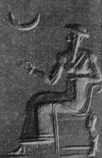
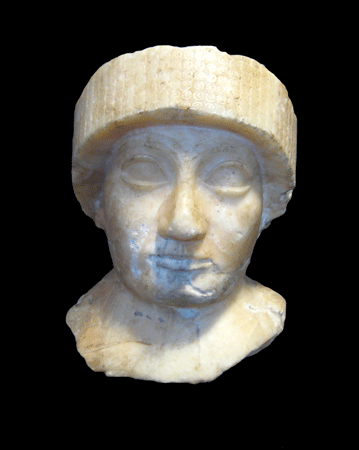
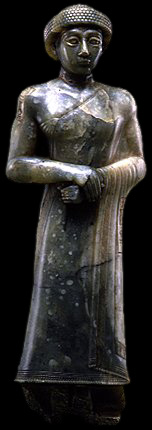
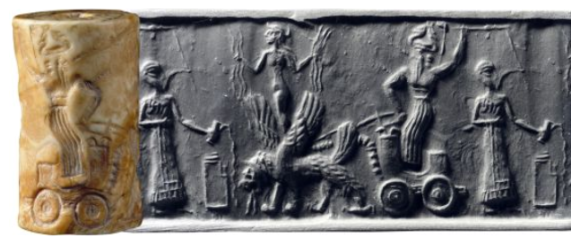
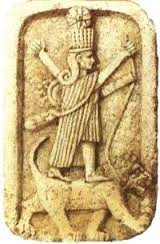
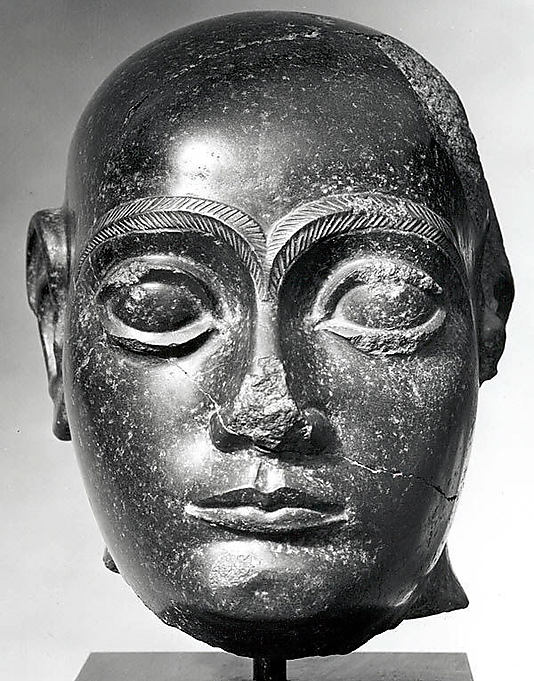
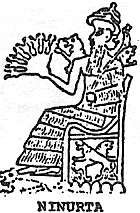
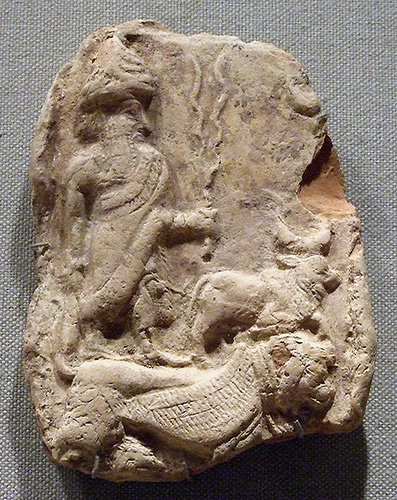
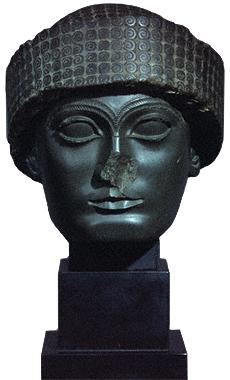
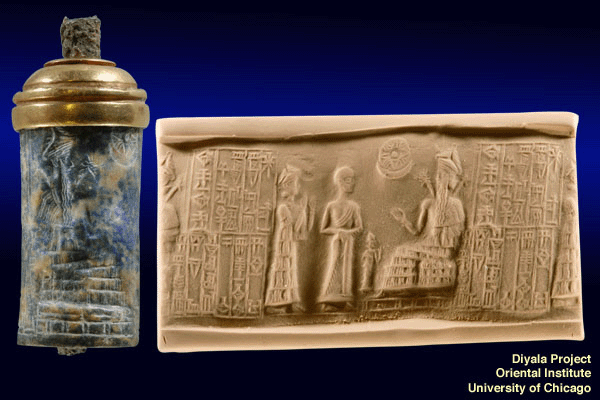
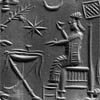
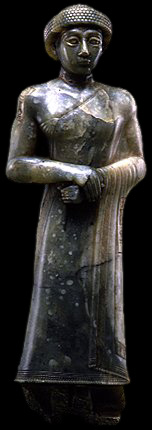
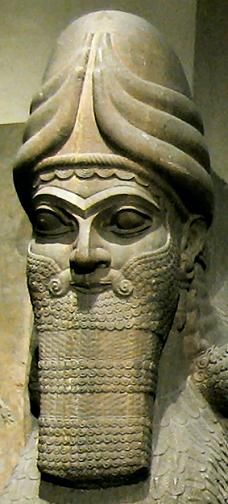
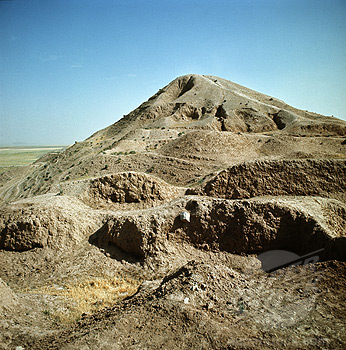
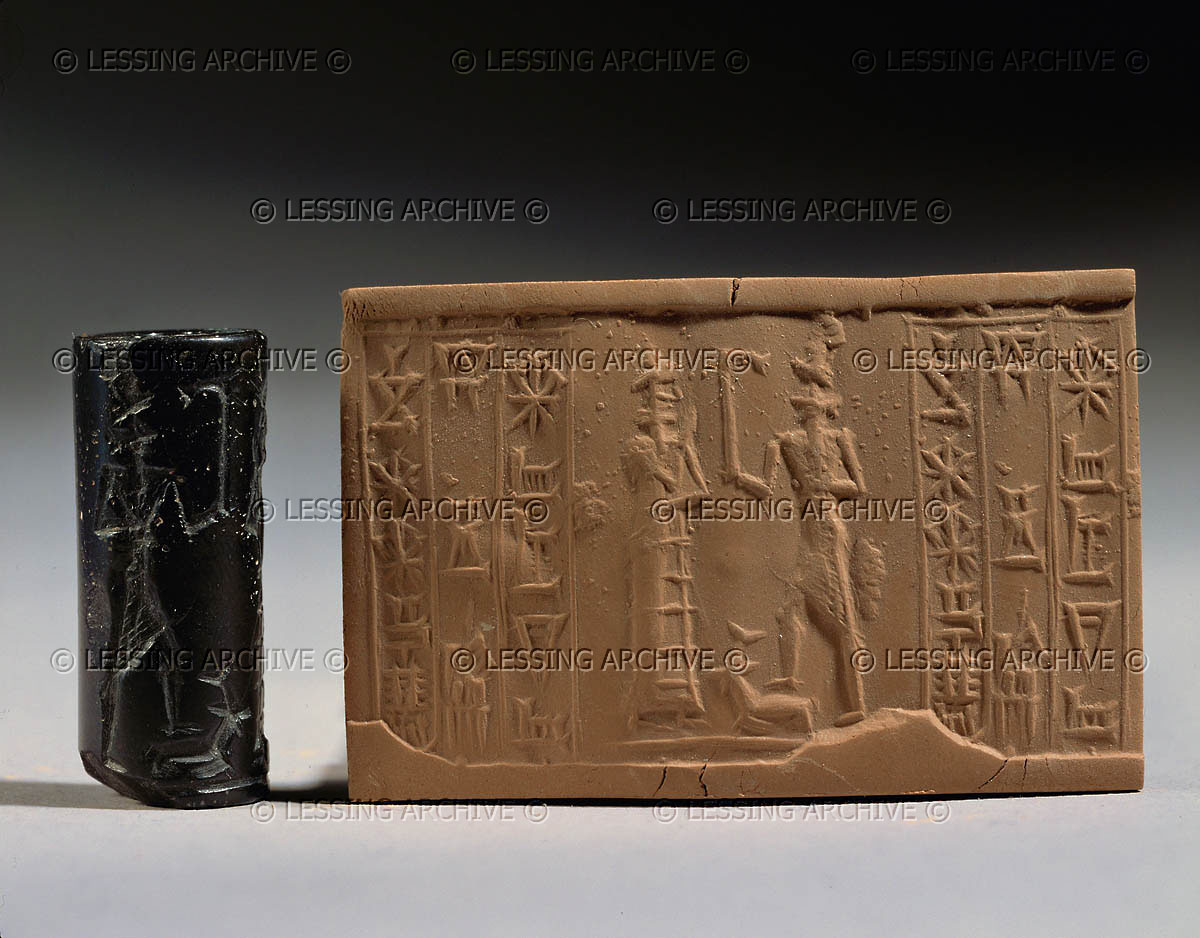
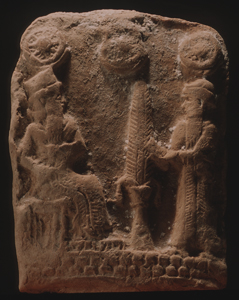
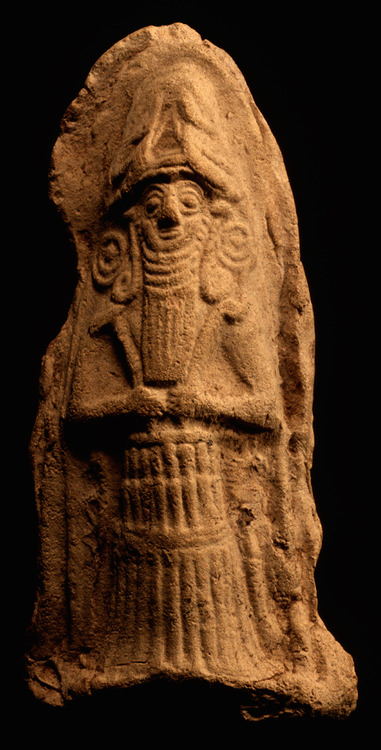
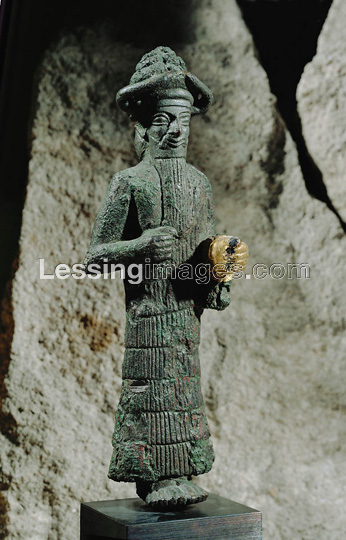
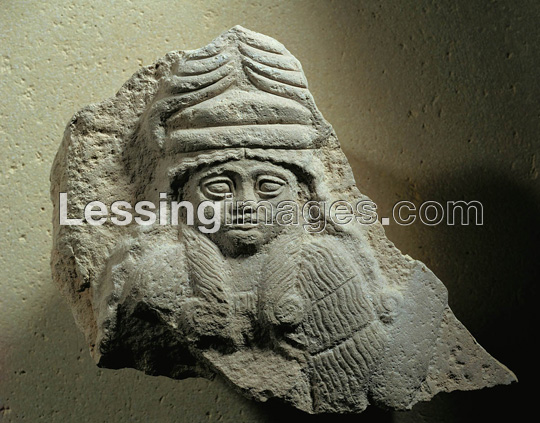
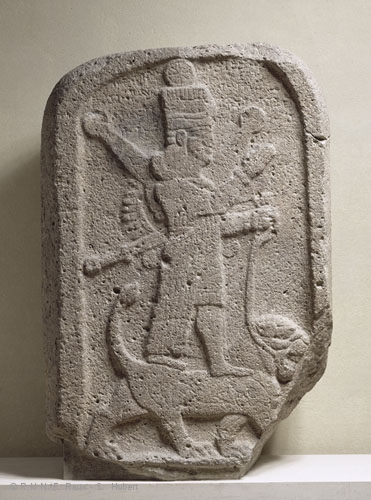
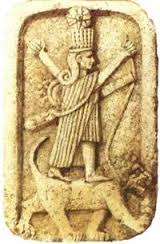
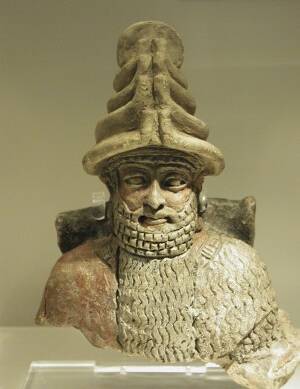
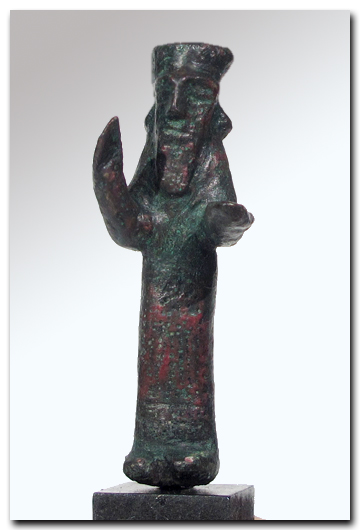
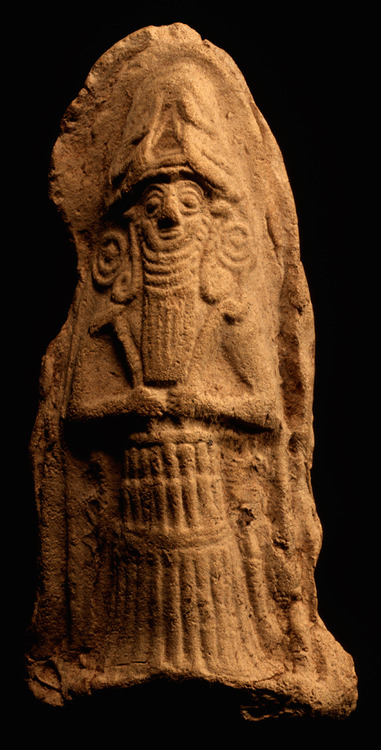
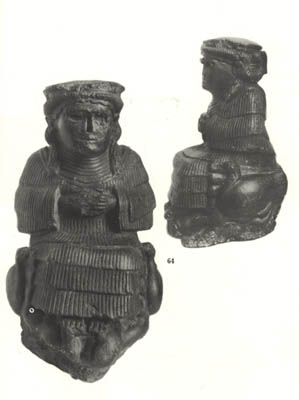
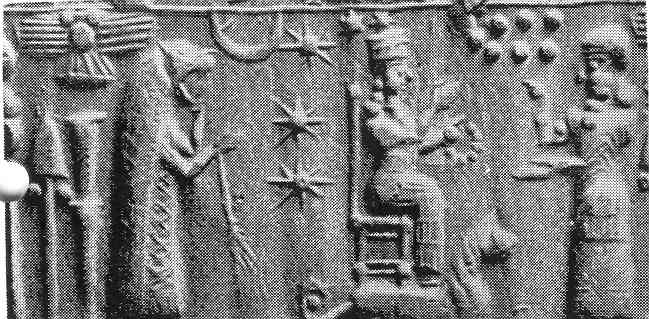
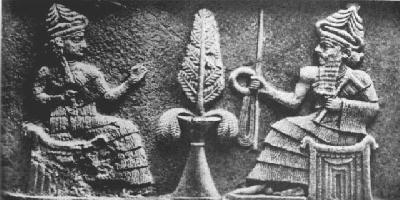
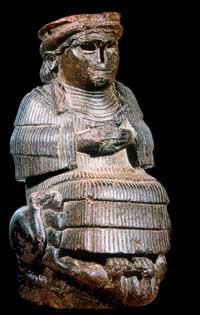
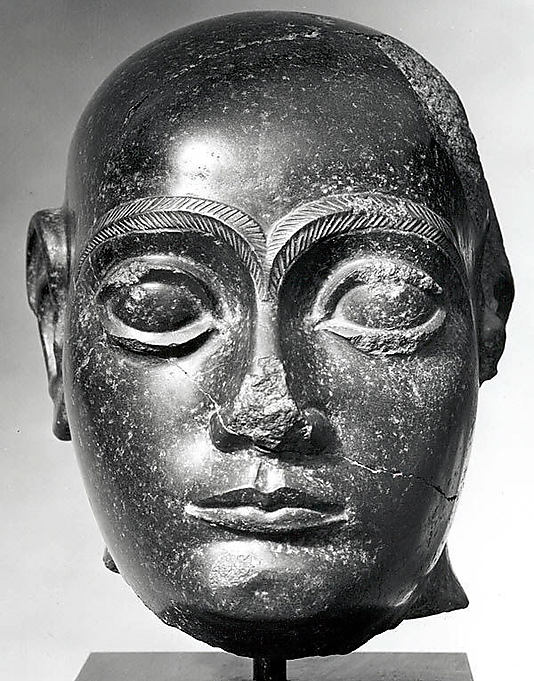
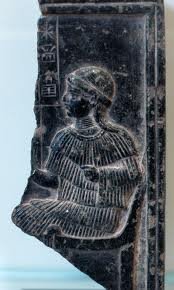
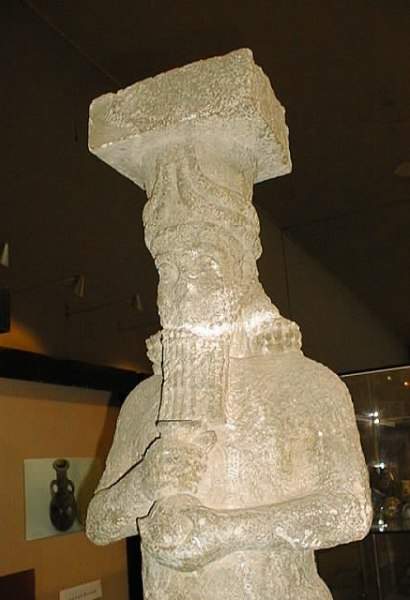
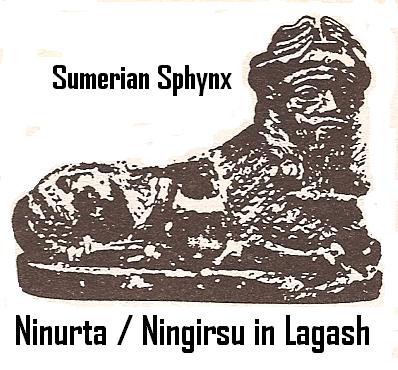
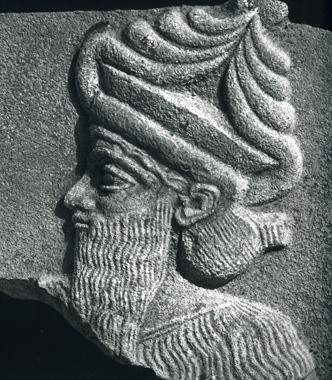
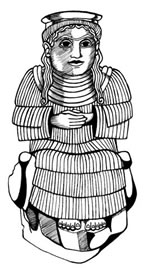
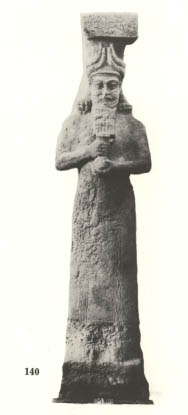
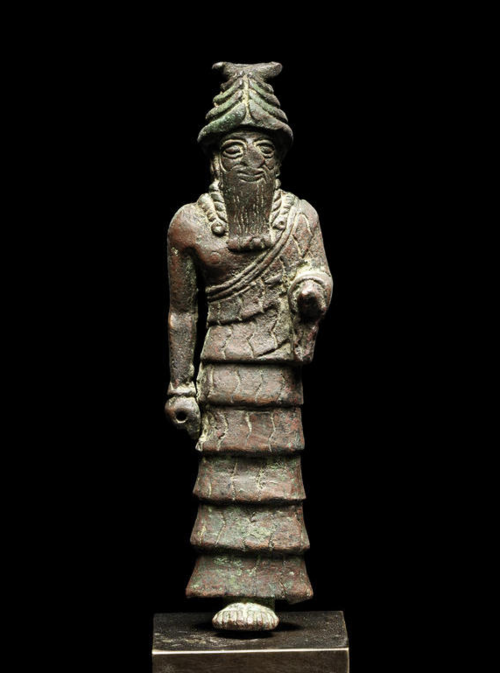
2a - Nannar statue 2,000 B.C.2bc - Nanna & his symbol

. Nannar = Sumerian

. Nanna = Akkadian, Sumerian short for Nannar bright oneaffectionately called Father Nanna” 

. Sin = Akkadian

. SU.EN = Akkadian “Multiplying Lord” due to his twins Inanna & Utu

. Acimbabbar = Sumer

. El = Canaanites (retired god married to Asherah), Biblical name for Yaweh during time of Abraham

. lofty deity–Ab Adam-father of man, the Kindly, the Merciful, creator of things created”

. Ares = Greek

          . Mars = Roman

. 1st son born to Enlil & Ninlil 

. older brother to Ishkur / Adad

. younger ½ brother to Enlil’s heir, Ninurta

. married to Ningal– “great lady”, daughter to Enki & Ningikuga

. Nannar’s ruling # is 30, Ningal’s # is 25

. Nannar is the Moon God, the Moon Crescent was his symbol until falling ill, then it was given to son Utu

          . Monday named after Moon Day, for Moon Crescent God Nannar

             . Nanna, your crescent moon is called “the crescent moon of the seventh day (?)”.

. Nannar was given sovereignty over the great city-state of Ur, (of Biblical hero Abraham fame)

          . Harran was built as a copy of Ur, & designated a city of Nannar, the Moon God

           . Ehulhul, the temple of Sin in Harran

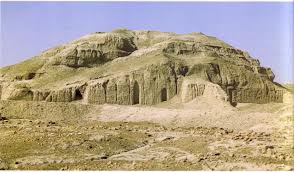
 . Egishnugal (“House of the seed of the throne”) ziggurat temple residence of Nannar in Ur

           . E-kiš-nu-ĝal (“House sending light to the earth”) in Ur

          . E-ab-lua (“House with teeming cattle”), Nannar possessed over one million cattle in large pens in Urim / Ur

          . Kar-zida (“Pure quay”) in Gaeš, small shining city of Suen

          . E-dim-an-na (“Temple of the bond of heaven“), built by Nebuchadnezzar for Sin

          . E-hursang (“House which is a hill”), construction of Shulgi in Ur

          . E-mud-kura in Ur

          . E-temen-ni-guru, main ziggurat of Ur

___________________________________________________________________________________________

According to Sitchin Books:

Part of the Sinai peninsula was called by the Old Testament the (“Wilderness of Sin”), Mount Sinai is named in Arabic, (Nakhl”) after the goddess Ningal, the spouse to Sin.

Jericho / Yeriho in the Semitic / Biblical word, means (“City of the Moon God”), Allah in Arabic, is adopted from El .

___________________________________________________________________________________________________________

Sons:

            . Utu / Shamash, Sun God

            . Papsukal


Daughters:

            . Inanna / Ishtar, Goddess of Love & War 

            . Ereshkigal, Queen of the Under World / Netherworld / Hades

(Shara’s House in) Umma – Temple Hymn

The Electronic Text Corpus of Sumerian Literature

(Texts: All Artifacts, Color Coding, & Writings in Bold Type With Italics Inside Parenthesis, are Added by Editor R. Brown, not the Authors, Translators, or Publishers!)

(gods in blue)

O E-bur-sigsig (House with beautiful bowls)

set up under heaven, mighty banqueting hall, fulfilling (?) the commands,

abundance of the midst of the sea in ……, at whose holy …… there is entreaty and joy.

The faithful man has enlarged E-ma (Magnificent house), the house of Šara

(Shara, Shu-Suen & Inanna’s son, more god than man), for you in plenty.

2 - Inanna (powerful goddess Inanna, Shara’s mother, Goddess of Love & War)

Your house E-ma — whose prince is the princely son of the Mistress

continues (?) in good fortune, an area of abundance and well-being.

The one who arranges the hair at the nape of the neck, with the gaze of a wild cow,

Šara (Shara, Roman god Cupid), who …… good things,

the son who allots the divine powers (alien technologies) to his mother,

has erected a house in your precinct,

O house Umma, and taken his seat upon your dais.

314. 11 lines: the house of Šara in Umma.

Letter from Gudea to His God Imploring Support: translation

The Electronic Text Corpus of Sumerian Literature

(Texts: All Artifacts, Color Coding, & Writings in Bold Type With Italics Inside Parenthesis, are Added by Editor R. Brown, not the Authors, Translators, or Publishers!)

(gods in bluemixed-breed demigods in teal)

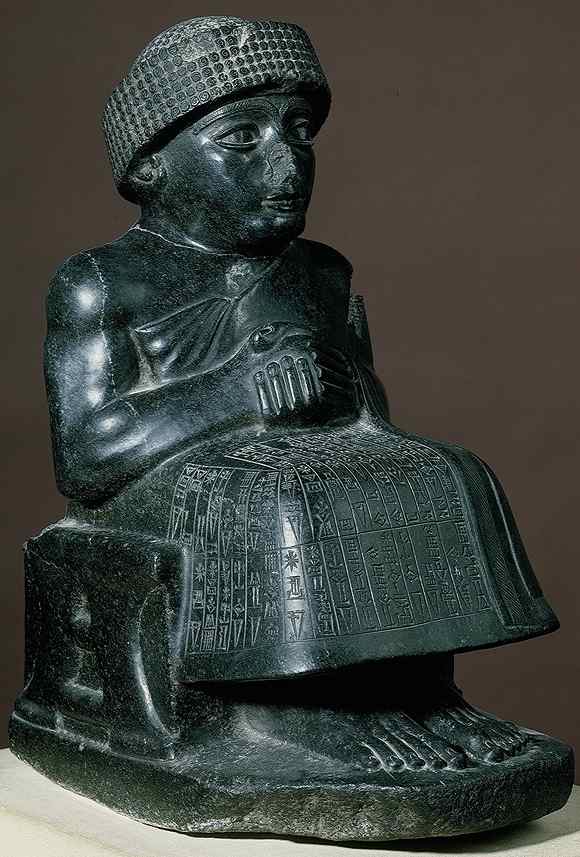
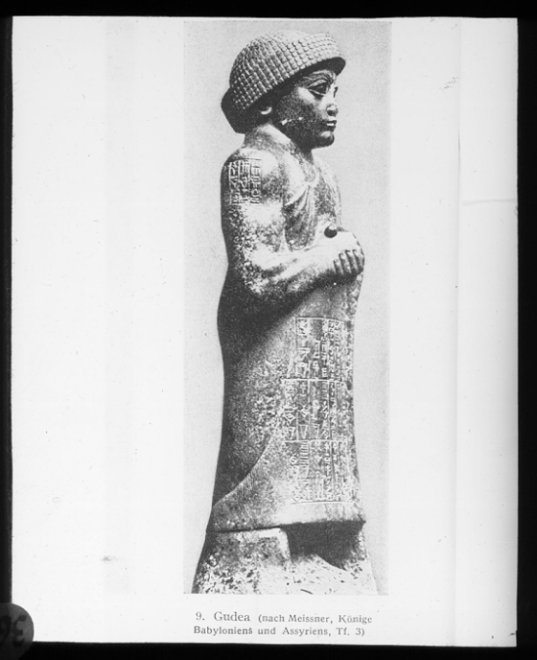
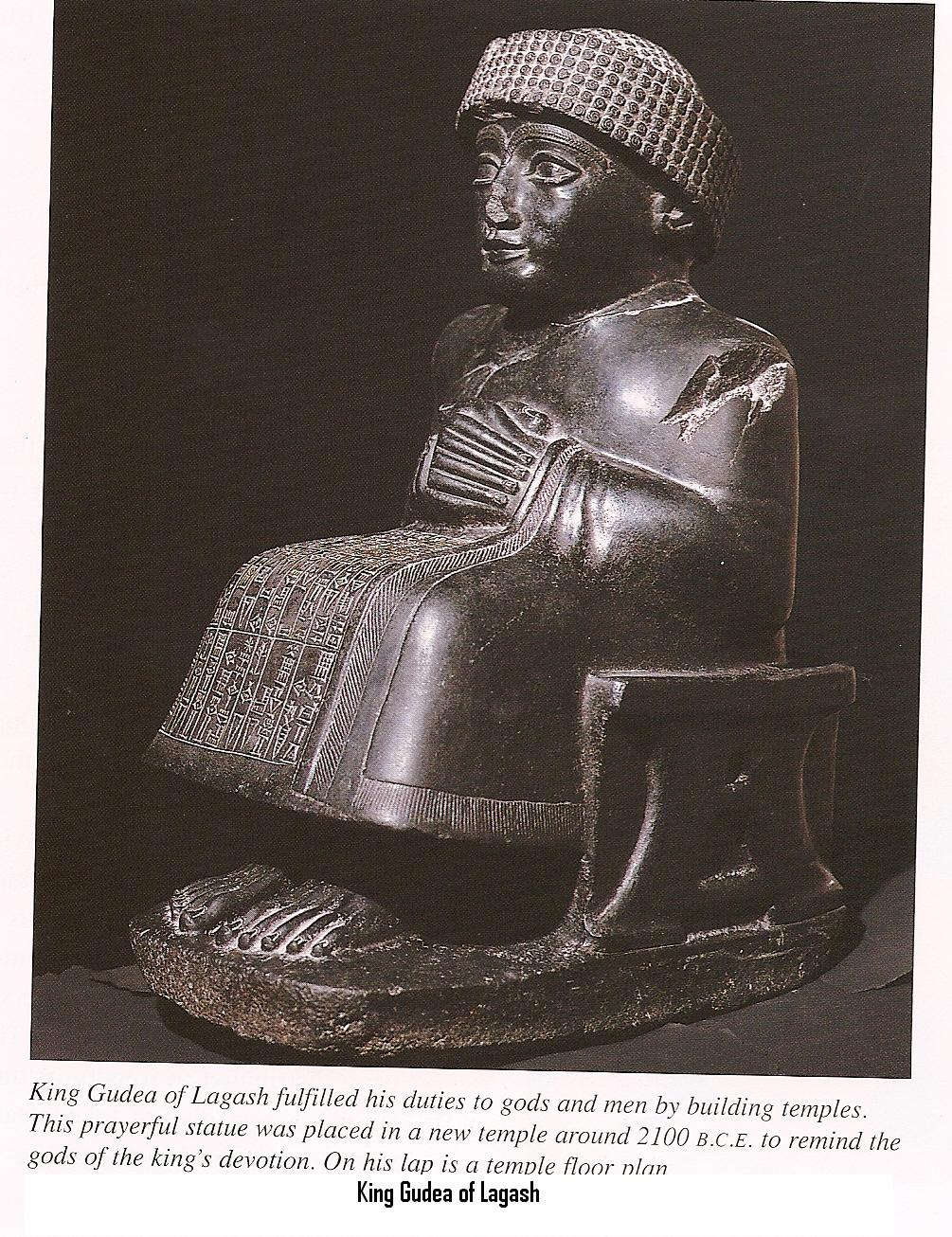
            8gg - King Gudea of Lagash (Gudea, 2/3rds divine son-king of Ninsun‘s, Ninurta‘s grandson)

            1-2 Speak to my god: this is what Gudea, your servant, says:

            3-4 I am like a sheep who has no reliable shepherd; there is no reliable herdsman to lead me on.

            5-6 An unintelligent merchant transported me (?) for trading purposes.

         With a vicious whip he …… me cruelly like a donkey.

            7-9 I am noble (?) but do not utter a word, being vigilantly (?) …….

         Seven times …… has not …… my accomplishments.

         Seven times my god (?) has not been able to find out about their extent.

            10 My god, I am not one to be hostile.

         May you show sympathy towards me once again.

Inanna and Gudam:

The Electronic Text Corpus of Sumerian Literature

(Texts: All Artifacts, Color Coding, & Writings in Bold Type With Italics Inside Parenthesis, are Added by Editor R. Brown, not the Authors, Translators, or Publishers!)

(gods in bluemixed-breed demigods in teal…)

        SEGMENT A

       8ee - King Gudea, son to goddess Ninsun 8b - Gudea of Lagash  (Lagash King Gudea, mixed-breed son-king to Ninsun)

          1 Gudam…… the city.

        unknown no. of lines missing

        SEGMENT B

       8e - Gudea, Governor of Lagash 3aa - mixed-breed king, Inanna & unknown god

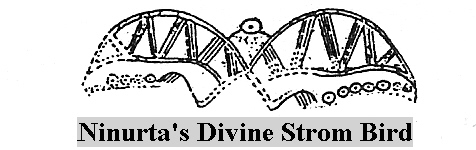
               (Gudea;        Gudea, elevated Goddess of Love Inanna, Ninurta with his winged beast chariot / “storm bird“)

          1-7 Gudam…….Gudam…….Inanna…….Gudam…… within Unug (Uruk) …….

        He …… the storehouse …….

        Gudam…… the beer, …… the wine, …… the bronze vessels, …… the bronze vessels …….

        unknown no. of lines missing

        SEGMENT C

        1-9 They filled the bronze vessels to the brim.

        He made the tilimda vessels shine like the holy barge, …… fine chickpea flour,

        bearded carp ……. ……, he …… fish like dates.

        Many followed Gudam on the streets of Unug (Uruk).

        They sat armed before him.

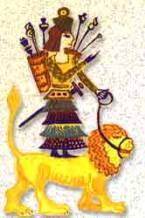
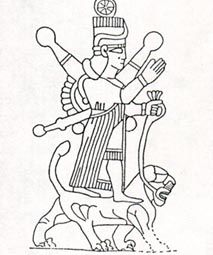
          3d - Inanna - Ishtar upon lion (armed Inanna atop her zodiac lion symbol of Leo, & her 8-pointed star symbol of Venus)

        Her = Inanna‘s singer …… came out to …… the forceful king, and looked at the troops.

        The singer met him with a song, …… string with his hand:

        10-15 “What you have eaten, what you have eaten —

        it was not bread that you have eaten, it was your flesh that you have eaten!

        What you have drunk, what you have drunk —

        it was not beer that you drank, it was your blood that you drank!

        Gudam, many followed you on the streets of Unug (Uruk); they sat armed before you.”

        16-19 “…… what the woman ordered me, when I have …….”

        Gudam slapped his thigh with his fist in annoyance; fear overcame him:

        8d - Gudea as high-priest of Lagash 5b - Ninurta with his 50-headed mace weapon (Gudea; his giant grandfather Ninurta, with his 50-headed mace)

        “He did not grasp the Car-ur, my heroic weapon (alien technologies from Ninurta).

        For me the temple (ziggurat residence) of Zabalam …….”

         2caa - Anu's house in Uruk (E-ana / ziggurat / residence of Anu & Inanna in Uruk)

        20-25 He lopped off the crossbeams of E-ana (Anu’s temple when on Earth) as if (?) they were branches.

        Gudam went out into the street.

        Gudam crushed many on the streets of Unug, and killed many with his mace.

        He hacked down the door of the city gate (the other ms. has instead: …… the gate, the gate of Ickur (Ishkur / Adad).


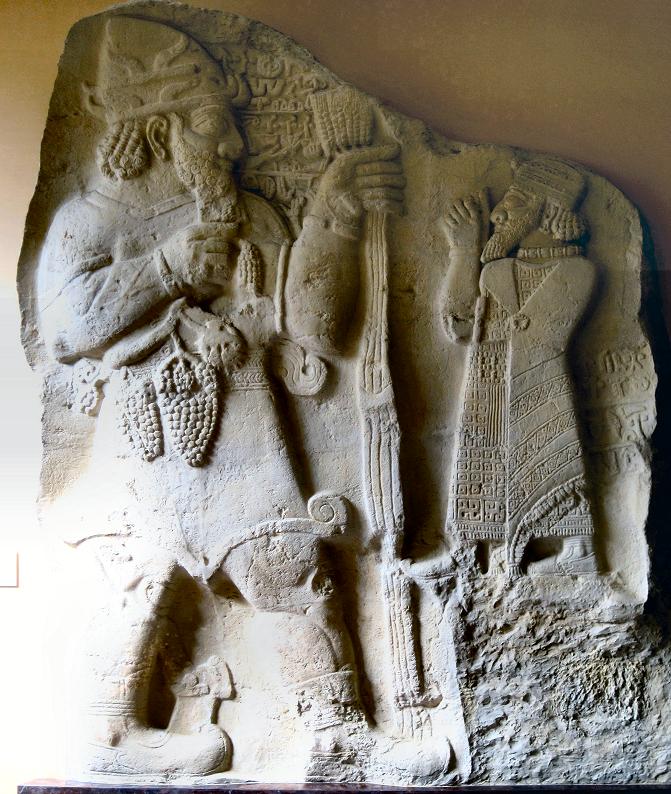
         2d - Adad with his weapon of brilliance 9d - giant god Teshub & unknown king (Ninurtagiant Anunnaki god Adad / Ishkur, & king)

        He went out from ……

        26-29 A junior fisherman, a fisherman of Inanna, turned

        (the other ms. has instead: ……) the double-ax against him and struck Gudam down.

        Gudam began to weep, and turned pale:

         1 - Ishtar & her divine weapons (Inanna, goddess who espoused many mixed-breed kings for thousands of years, hence – Goddess of Love)

          30-32  Inanna, spare my life! I will give you bulls of the mountains,

        I will make your cow-pen full! I will give (?) you sheep of the mountains, I will make your sheepfold full!”

        33-35 Holy Inanna replied to him: ” (the other ms. adds: …… bulls of the mountains for me.

        …… sheep of the mountains for me.

        …… weapon …….)

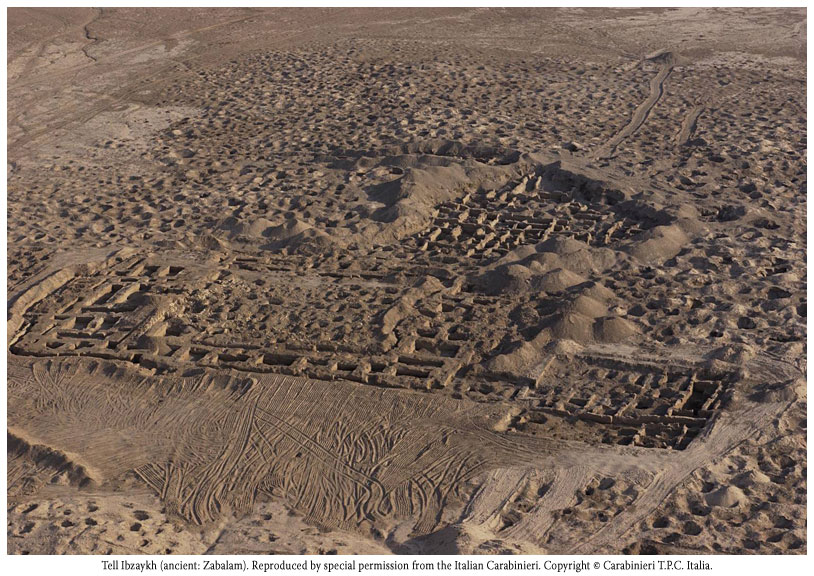
         (Zabalam, ancient city of Mesopotamia)

        The fields of Zabalam, where you dwelt: its villages …….

        Over a wide area, may …… calm for you, may …… desire (?).”

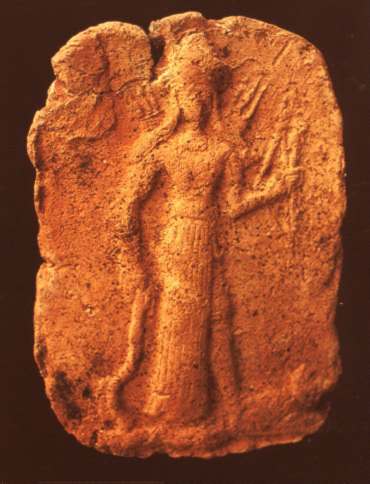
       1c - Inanna with Liberty Torch  (Inanna, Ninurta’s niece, Goddess of Love & War)

          36-37 Inana, I will speak of your heroism.

        It is pleasant to praise you!

Praise of Gudea

unknown web source

(Texts: All Artifacts, Color Coding, & Writings in Bold Type With Italics Inside Parenthesis, are Added by Editor R. Brown, not the Authors, Translators, or Publishers!)

(gods in bluemixed-breed demigods in teal…)


             8c - Gudea, son of Ninsun & Lugulbanda (Gudea, giant mixed-breed son to goddess Ninsun)

          I had debts remitted and “washed all hands.”

For seven days no grain was ground.

The slave-woman was allowed to be equal to her mistress,

the slave was allowed to walk side by side with his master.

In my city the one unclean to someone was permitted to sleep outside.

I had anything disharmonious turned right back to where it belongs.


I paid attention to the justice ordained by Nanse

(Enki & Ninhursag‘s daughter, ½ sister to Ninurta) and Ningirsu (Ninurta);

I did not expose the orphan to the wealthy person

nor did I expose the widow to the influential one.

In a house having no male child I let the daughter become its heir.

Inscription on Statues A-H, Etc. of the Louvre (Gudea)

Records of the Past, 2nd series, Vol. II, ed. by A. H. Sayce, [1888], at sacred-texts.com

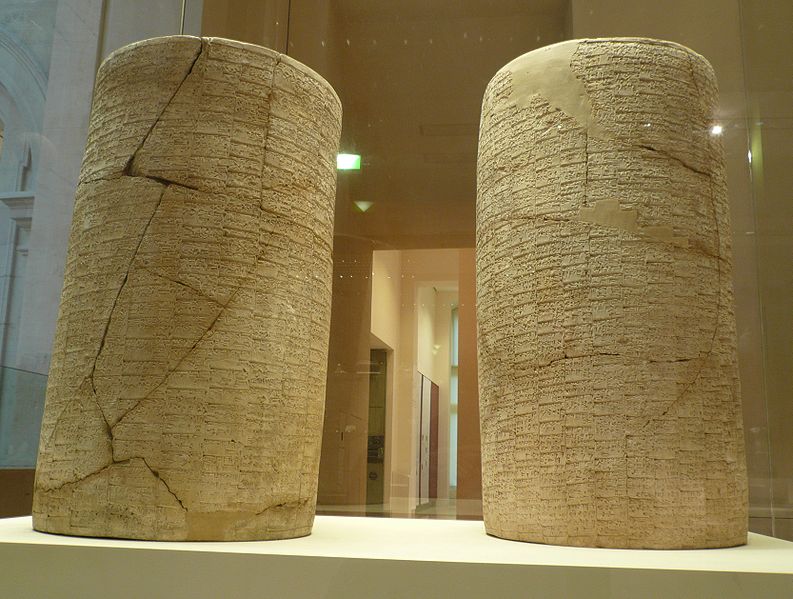
Gudea cylinders in the Louve  (Gudea Inscriptions)

(Texts: All Artifacts, Color Coding, & Writings in Bold Type With Italics Inside Parenthesis, are Added by Editor R. Brown, not the Authors, Translators, or Publishers!)

(gods in bluemixed-breed demigods in teal…)

8b - Gudea of Lagash 8q - Ninsun, Gudea, Inanna, & Ningishzidda

 (Gudea, King of Lagash, giant 2/3rds divine son to goddess Ninsun & spouse LugalbandaNinsun with son Gudea & Ningishzidda)

1. Gudea,

8d - Gudea as high-priest of Lagash  (Gudea, bald headed High-Priest & Governor of Ninurta’s Lagash)
2. the patesi
3. of Shirpurla
(Lagash),

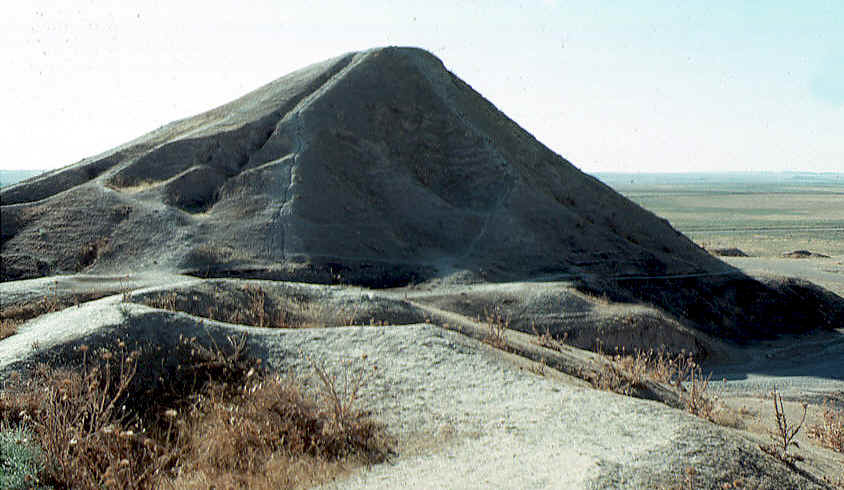
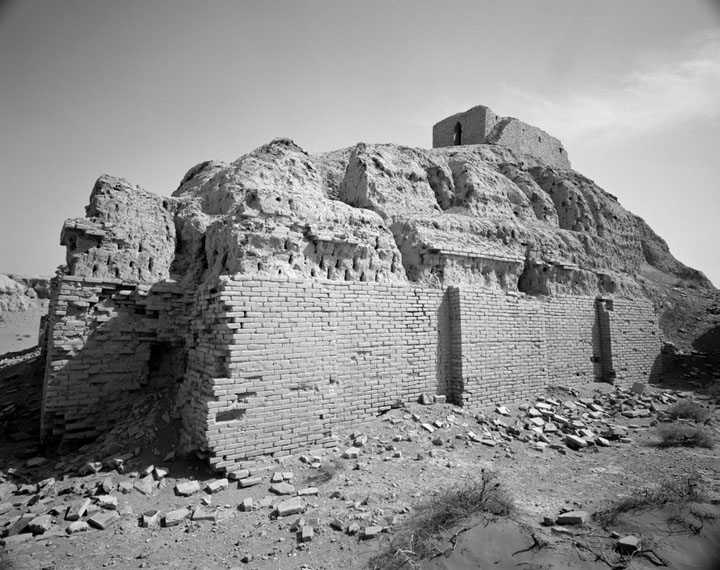
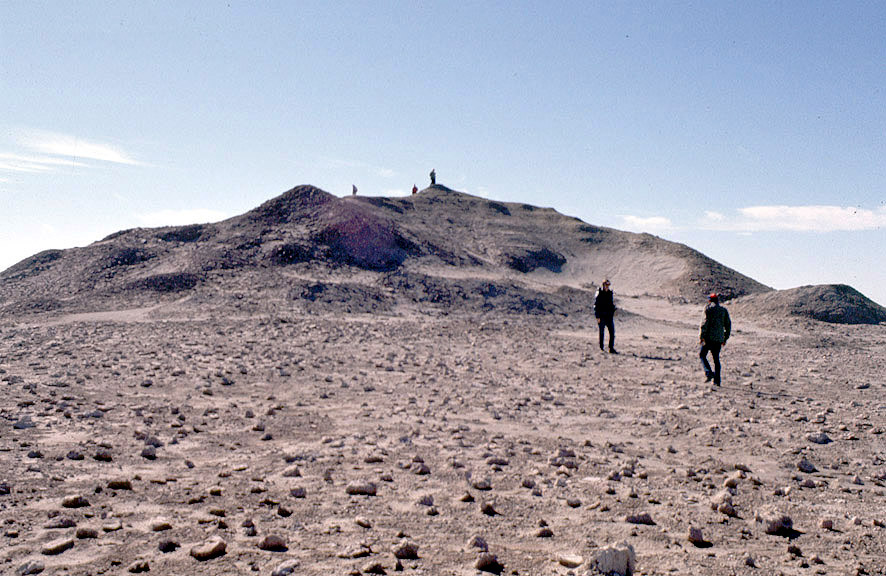
2b - Nimrud Tel, house of Ninurta's  (Ninurta‘s ancient ziggurat residence of mud bricks)
4. who the temple
E-ninnû (Ninurta‘s ziggurat temple residence in Lagash)
5. of the god
Nin-girsu (Ninurta)
6. has constructed.

COLUMN I

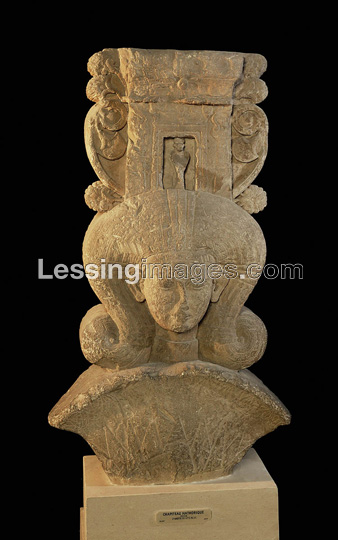
2a - Ninhursag, Ninmah, Nintu, etcHathorix capital. Limestone, bas-relief from Paphos, Cyprus 80 x 44 x 24 cm AM 27552e - Ninhursag & DNA experiments (Ninurta‘s mother Ninhursag)

1. For the goddess Nin-gharsag (Ninhursag),
2. the goddess who protects the city,
3. the mother of its inhabitants,
4. for his lady,
5.
Gudea
6. the patesi
7. of Shirpurla
8. her temple (residence) of the city
Girsu-ki (nearby capitol of Lagash city-state)
9. has constructed.

COLUMN II

1. Her sacred altar (?)
2. he has made.

2c - young Ninhursag in lab  (Ninhursag, Chief Medical Science Officer, in her lab)
3. The holy throne of her divinity

4. he has made.
5. In her sanctuary he has placed them.

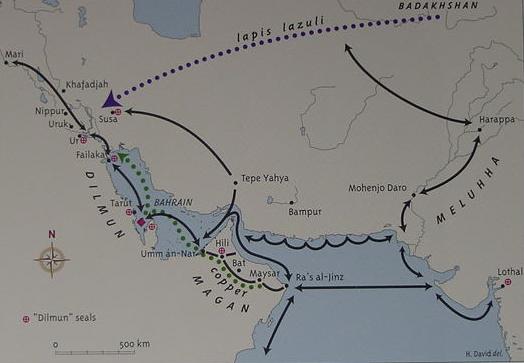
2a - Dilmun & Magan (Dilmun & Magan, virgin lands given by Enki)
6. From the mountains of the land of
Mâgan2

COLUMN III

1. a rare stone he has caused to be brought;
2. for her statue
3. he has caused it to be cut.
4. “O goddess who fixes the destinies of heaven and earth,

2aa - temple of Hathor - Ninhursag (Ninhursag / Nintu artifacts)
5.
Nin-tu (Ninhursag)
6. mother of the gods,
7. of
Gudea

COLUMN IV

1. the builder of the temple
2. prolong the life!”
3. by this name he has named it (i.e. the statue),
4. and in the temple he has placed it.

No. 2.—Inscription on Statue B of the Louvre 1

(Texts: All Artifacts, Color Coding, & Writings in Bold Type With Italics Inside Parenthesis, are Added by Editor R. Brown, not the Authors, Translators, or Publishers!)

(gods in bluemixed-breed demigods in teal…)

COLUMN I

5f - Ninurta slays demon DNA experiments (Ninurta, warrior son to Enlil & NInhursag)

     1. In the temple of the god Nin-girsu (Ninurta),

       2. his king,

       (statue of Gudea, semi-divine King of Lagash)

  1. 3. the statue of Gudea,
    4. the patesi
    5. of Shirpurla (Lagash),
    6. who the
    temple E-ninnû (“House of 50”, Ninurta’s # & residence in Lagash)
    7. has constructed:
    8. 1 qa of fermented liquor,
    9. 1 qa of food,
    10. half a qa of …,
    11. half a qa of …,
    12. such are the offerings which it institutes.
    13. As for the patesi
    14. who shall revoke them,

      (Ninurta)
    15. who the orders of the god
    Nin-girsu
    16. shall transgress,
    17. let the offerings instituted by him
    18. in the temple of the god
    Nin-girsu

Ziggurat Nimrud Iraq (mud brick temple residence of the god Ningirsu / Ninurta)

19. be revoked!
20. Let the commands of his mouth be annulled!

COLUMN II

5aa - Ninurta, son of Enlil & Ninhursag, heir 7b - a god, primitive man, & Ninurta (Ninurta, Enlil‘s warrior son with alien technologies)

1. To the god Nin-girsu,
2. the powerful warrior
3. of the god
Ellilla (Enlil),

8h - Gudea, Ningishzidda, Dumuzi, Enki missing  (Gudea lead by the hand of Ningishzidda & Dumuzi)
4. Gudea,
5. the architect (?),
6. the patesi
7. of Shirpurla,
8. the shepherd chosen by the unchangeable will
9. of the god
Nin-girsu,
10. regarded with a favorable eye
11. by the goddess
Ninâ (Enki‘s daughter),
12. dowered with power
13. by the god
Nin-dara (Nanshe‘s husband),
14. covered with renown

 2j - Ninurta, unknowns, & Bau (Prince Ninurta & Princess spouse Bau)
15. by the goddess
Bau,
16. the offspring

2a - Ninsun, mother of Gods & Mixed-Breed Kings  (Ninsun, daughter to Ninurta, mother to mixed-breed son-king Gudea)
17. of the goddess Gutumdug (Ninsun),
18. dowered with sovereignty and the scepter supreme
19. by the god
Gal-alim (Ninurta‘s son Ig-alim),

COLUMN III

1. proclaimed afar among living creatures
2. by the god
Dun-shaga (unidentified?),
3. whose primacy has been firmly founded

  (Ningishzidda, Master Builder of ziggurats, with Ninsun)
4. by the god
Nin-gish-zida (Enki & Ereshkigal‘s son)
5. his god.
6. After that the god
Nin-girsu
7. had turned towards his city a favorable gaze
8. (and)
Gudea
9. had chosen as the faithful shepherd of the country
10. (and) among the divisions (?) of men
11. had established his power,

12. then he purified the city and cleansed it.

2bb - Ningishzidda placing the temple peg for Gudea 2b - Ningishzidda, the Fashioner  (Ningishzidda lays foundation pegs for ziggurats)
13. He has laid the foundations (of a temple)
14. and deposited the foundation-cylinder.
15. The adorers of the demons (?),
1

COLUMN IV

1. the evokers of spirits (?),
2. the necromancers (?),
3. the prophetesses of divine decrees (?),
4. he has banished from the city.
5. Whoever has not departed obediently,
6. has been expelled perforce by the warriors.
7. The temple of the god
Nin-girsu
8. in all respects
9. in a pure place he has constructed.
10. No tomb has been destroyed (?),
11. no sepulchral urn has been broken (?),
12. no son has ill-treated his mother.
13. The ministers,
14. the judges,
15. the doctors,
16. the chiefs,
17. during the execution of this work
18. have worn
garments of … (?).
19. During all the time (of its construction)

COLUMN V

1. in the cemetery of the city no ditch has been excavated (?),
2. no corpse has been interred (?).
3. The Kalû
2 has performed his funeral music or uttered his lamentations;
4. the female mourner has not caused her lamentations to be heard.
5. On the territory
6. of
Shirpurla

7. a man at variance (with his neighbor)
8. to the place of oath
1
9. leas taken no one;
10. a brigand
11. has entered the house of no one.
12. For the god
Nin-girsu
13. his king

Gudea cylinders in the Louve  (Gudea’s giant cylinders with his engravings)
14.
(Gudea) has made the dedicatory inscriptions (?);
15.
his temple E-ninnû which illuminates the darkness (?) (reflective finish outer layer),
16. he has constructed
17. and reinstated.
18. In the interior (of this temple) his favorite gigunû
19. of cedar-wood
20. he has constructed for him.
21. After that the temple of the god
Nin-girsu
22. he has had constructed,
23. the god
Nin-girsu,
24. the king beloved by him,
25. from the Sea of the Highlands (
Elam)2
26. to the lower Sea
27. has forcefully opened (the ways) for him.
28. In Amanum,
3 the mountain of cedars (in Lebanon),
29. [joists] of cedar,
30. whose [length] was 70 spans,
31. [and joists] of cedar
32. whose [length was] 50 spans,
33. [and joists] of box (?)
4
34. whose length was 25 spans,
35. he has caused to be cut;

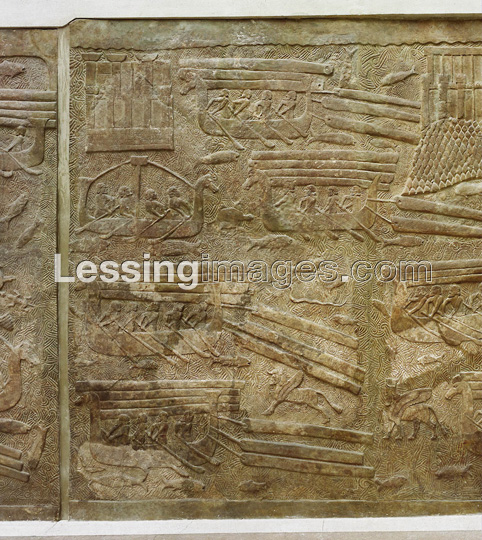
Island of Arvad (today Tyre), top right, on the Lebanese coast. Cedar wood transport for the building of a palace. Bas-relief from the Palace of King Sargon in Khorsbad, Mesopotamia (Iraq). Center panel, for continuation see 08-02-16/18,20 Gypseous alabaster.  (Lebanese cedars sent to Sumer for Enlil‘s & other giant alien gods residences)

36. from this mountain he has caused them to be brought.

37. The …
38. he has made
39. The …
40. he has made
41. The …
42. he has made
43. The …

Archaeological site of Nippur in Iraq  (Enlil‘s ziggurat ruins in his ancient city of Nippur)

44. he has made
45. As for the cedars
46. (some) to form great gates
47. he has employed;
48. with brilliant ornaments he has enriched them (?),
49. and in the temple
E-ninnû
50. he has placed them.
51. (Others) in his sanctuary E-magh-ki-a-sig-dê-da
52. he has used as beams.
53. Near the city of
Ursu,
54. in the mountains of Ib-la1
55. joists of zabanum trees,
56. of great sha-ku
2 trees,
57. of tulubum trees, and of gin trees,
58. he has caused to be cut;

COLUMN VI

1. in the temple of E-ninnû
2. he has caused them to be used as beams.
3. From
Shamanum
4. in the mountains of
Menua,
5. from
Susalla (?)3

1 - Martu - Amurru, spouse to Utu's daughter Adjar-kidug  (Martu, Anunnaki King Anu‘s & Princess Ninhursag‘s son)
6. in the mountains of
Martu4
7. nagal stones
8. he has caused to be brought;
9. in slabs

10. he has caused them to be cut;
11. the Holy of Holies in the temple
E-ninnû
12. he has constructed of them.
13. From
Tidanum1

Cylinder seal and imprint, Paleo-Babylonian, from Tello Offering scene before a god brandishing a curved stick. Haematite, H: 2,8 cm MNB 1471  (Princess Ninhursag with her son & brother, Prince Martu)

14. in the mountains of Martu
15. shirgal-ghabbia stones
16. he has caused to be conveyed;
17. in the form of urpadda
18. he has caused them to be cut;
19. to (receive) the bars of the gates
20. in the temple he has arranged them.
2I. From the country of
Kâgal-adda-ki2
22. in the mountains of
Ki-mash3
23. I caused copper to be taken,
24. To make the arm (?) from which one escapes not
25. he has employed it.
26. From the country of
Melughgha4
27. kala trees5 he has imported;
28. he has caused to be made.
6
29. From Kilzanim
7
30. he has imported;
31. to make the arm (?) …
32. he has employed it.
33. Gold-dust
34. from the mountains of
Ghaghum
35. he has imported;
36. for the fabrication of the arm (?) …
37. he has utilized it.
38.
Gold-dust

2e - Martu & king  (giant Anunnaki god Martu & mixed-breed king, possibly Gudea?, symbols of gods above)

39. from the mountains of Melughgha
40. he has imported
41. to make the
E-martu1
42. he has employed it.
43. Lid-ri (?)
44. he has imported.
45. From the country of
Gubin
46. the land of the ghaluku trees,
2
47. ghaluku wood
48. he has imported;
49. to make pillars (?)
50. he has employed it.
51. From the country of
Magda
52. in the mountains of the river Gurruda
53. bitumen (?)
54. he has imported;
55. the platform of the temple
E-ninnû
56. he has constructed.
57. Im-gha-um
58. he has imported.
59. From the mountains of
Barsip
60. nalua stones
61. in large boats
62. he has caused to be brought;
63. the foundation of the temple
E-ninnû he has encircled with them.
64. By arms, the city of
Anshan in the country of Elam
65. he has conquered;
66. its spoils
67. to the god
Nin-girsu
68. in the temple E-ninnû
69. he has consecrated.
70
. Gudea,
71. the patesi
72. Of
Shirpurla,
73. after that the t
emple E-ninnû

  (Royal Prince Ninurta, Anunnaki King Anu‘s grandson, Prince Enlil‘s son & heir)

74. to the god Nin-girsu
75. he had constructed,
76. has built an edifice:
77. a pillared (?) temple

COLUMN VII

1. no patesi
2. for the god
Nin-girsu
3. had constructed;
4. he has constructed it for him.
5. He has written there his name;
6. he has made dedicatory inscriptions (?).
7. The orders of the mouth
8. of the god
Nin-girsu
9. he has faithfully executed.
10. From the mountains of the country of
Mâgan1
11. a hard stone he has imported.

2 - Ninurta stela found in Library of Nineveh  (artifacts by the thousands unearthed in Ninurta temple ruins)
12. For his statue
13. he has caused it to be cut.
14. “O my king,
15. whose temple
16. I have built,
17. may life be my recompense!”
18. By this name he has named (the statue),
19. and in the temple
E-ninnû

20. he has erected it.

8e - Gudea, Governor of Lagash8b - Gudea of Lagash (Gudea, governor, high-priest, & king under Ninurta)
21.
Gudea
22. unto the statue
23. has given command:
24. “To the statue of my king
25. speak!”
26. After that the temple
E-ninnû,
27. his favorite temple
28. I had constructed,
29. I have remitted penalties, I have given presents.
30. During seven days obeisance has not been exacted.
31. The female slave has been made the equal of her mistress;

32. the male slave
33. has been made the equal of his master;
34. in my city the chief of his subject
35. has been made the equal.
36. All that is evil from this temple
37. I have removed.
38. Over the commands
39. of the goddess
Ninâ (Enki‘s daughter)
40. and the god Nin-girsu
41. I have carefully watched.
42. A fault (?) the rich man has not committed;
43. all that he has desired (?) the strong man has not done.
44. The house where there was no son,
45. it is its daughter, who new offerings (?)
46. has consecrated;
47. for the statue of the god
48 before the mouth she has placed them.
49. Of this statue,
50. neither in silver nor in alabaster
51. nor in copper nor in tin
52. nor in bronze
53. let any one undertake the execution!
54. Let it be of hard stone!
55. Let a sacristy be established,
56. and of all that shall be brought there
57. let nothing be destroyed!
58. The statue which is before thee,
59. O god
Nin-girsu,
60. the statue.

8ee - King Gudea, son to goddess Ninsun (Gudea, 2/3rds divine son to Ninsun, grandson to Ninurta)
61. of
Gudea,

COLUMN VIII

1. the patesi
2. Of Shirpurla,
3. who the temple (residence) E-ninnû
4. of the god
Nin-girsu
5. has constructed,
6. whosoever from the temple E-ninnû
7. shall remove

8. (or) its inscription
9. shall efface;
10. whosoever shall break it;
I1. on the fortunate day of the commencement of the year,
12. whoever in the place of my god,
13. his god—

6l - King Shulgi of Ur, Anzu, & Ninurta 

  (giant mixed-breed king & Ninurta with his winged beast symbol / alien hi-tech storm bird)
14. and it is
Nin-girsu
15. who is my king—
16. in the country shall invoke;
17. (whoever) my judgments
18. shall transgress,
19. my gifts
20. shall revoke;
21. (whoever) in the recitation of my prayers
22. shall suppress my name
23. and insert his own;
24. (whoever) of the Holy of Holies of the god
Nin-girsu, my king,
25. shall abandon the service (?)
26. and shall not keep it (ever) before his eyes;—
27. from the most distant days,
28. of all men of noble race,
29. of the patesis
30. of Shirpurla
31. who the temple E-ninnû
32. of the god
Nin-girsu
33. my king
34. have constructed,
35. and who have made dedicatory inscriptions (?),
36. the words of their mouth
37. let no one change
38. nor transgress their judgments!
39. Of
Gudea,
40. the patesi
41. of Shirpurla,
42. whoever shall change his words
43. or transgress his judgments,

 3a - Anu in flight3b - Anu of planet Nibiru (Anunnaki King Anu, & his sky-disc;   Anu)
44. may the god
Anna (Anu),

 (Enlil, Anu‘s son & Heir, Earth Colony Commander, Ninurta‘s father)

         45. may the god Ellilla (Enlil),

          2aa - temple of Hathor - Ninhursag  (Ninhursag artifacts)
         46. may the goddess Nin-gharsag

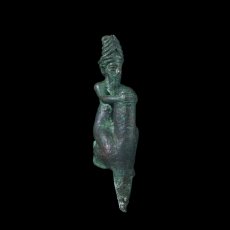
          "God with a golden hand", initially completely gilded. The god wears a long "kaunakes" which leaves one shoulder free,typical of all divinities since Akkadian periods. From Susa, early 2nd mill.BCE. Copper and gold, H: 17,5 cm AO 2823 2a - Enki keeper of the MUs-knowledge disks  (Prince Enki, King Anu‘s eldest & wisest son, 1st to land on Earth with crew of 50)

         47. may the god En-ki, whose word is unchangeable,

          6c - Ninurta wins battle, defeats Anzu (Ninurta stops Anzu‘s coup against father Enlil)
         48. may the god En-zu (Anzu?), whose name none pronounces,
         49. may the god Nin-girsu
         50. the king of weapons (alien technologies),
51. may the goddess
Ninâ (Enki & Ninhursag‘s daughter)
         52. the mistress of interpretations,
53. may the god
Nin-dara (Nanshe‘s husband)
54. the royal warrior,
55. may the mother of Shirpurla
56. the august goddess
Gatumdug (Ninsun, Ninurta‘s daughter),

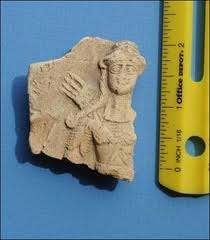
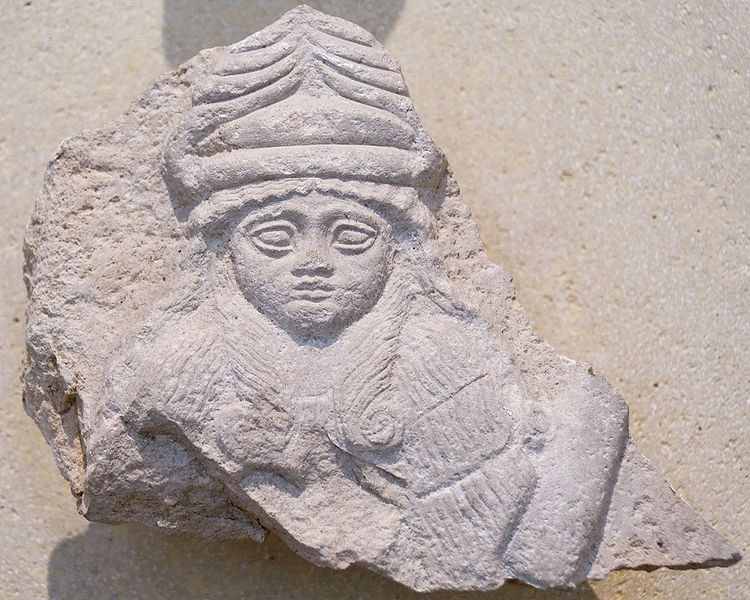
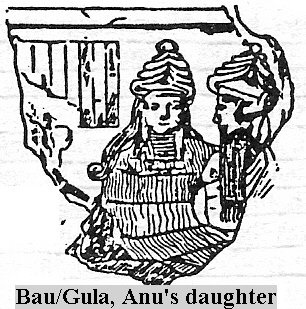
           Fragment of a stele with bust of the goddess Ba'u. Period of king Gudea, around 2100 BCE. From Tello. Limestone, H: 16,2 cm AO 4572  (Princess Bau, King Anu‘s daughter, Ninurta‘s spouse)

        57. may the goddess Bau (Ningirsu‘s spouse)
       
58. the lady the elder daughter of Anna (Anu),

        1c - war dressed Ishtar atop lion - Leo 3d-Inanna-Ishtar-upon-lion1  (Inanna, Goddess of Love & War)
        59. may the goddess Ninni (Inanna)
       
60. the lady of battles,

         2a - Utu, Shamash, twin to Inanna  (Utu, son to Nannar, twin to Inanna, symbolized as the Sun God)
61.
may the god Babbar (Utu)
        
62. the king of abundance (?),
63. may the god
Pasag (unidentified?)
        
64. the master workman of men (aliens directing earthlings to the work),
65. may the god
Gal-alima (Ninurta‘s son Igalim),
         66. may the god Dun-shagana (unidentified?),
         67. may the goddess Nin-marki (Enki & Nina’s daughter)

COLUMN IX

1. the eldest daughter of the goddess Ninâ (Enki & Ninhuerag‘s daughter),
2. may the goddess Duzi-abzu (Geshtinanna, Enki & Ninsun‘s daughter)
3. the mistress of Kinunir-ki,

3 - Ningishzidda & his father Enki (Ningishzidda, DNA Master Scientist, & his father Enki)
4. may my god Nin-gishzida (Enki & Ereshkigal‘s’s son),
5. change his destiny!
6. Like an ox,
7. may he be slain in the midst of his prosperity!
8. Like a wild bull

7 - Inanna. Utu, & Earthling underfoot (giant aliens Inanna & twin Utu with earthling underfoot)
9. may he be felled in the plenitude of his strength!
10. As for his throne, may those even whom he has reduced to captivity
11. overthrow it in the dust!
12. To efface its traces (?),

13. even of its memory (?),

14. may they apply their care!
15. His name, in the temple of his god
16. may they efface from the tablets!
17. May his god
18. for the ruin of the country have no look (of pity)!
19. May he ravage it with rains from heaven!
20. May he ravage it with the waters of the earth!
21. May he become a man without a name!
22. May his princely race be reduced to subjection!
23. May this man,
24. like every man who has acted evilly towards his chief,
25. afar, under the vault of heaven, in no city whatsoever
26. find a habitation!
27. Of the champion of the gods,
28. the lord
Nin-girsu,
29. the greatness
30. may the peoples proclaim!

No. 3.—Inscription on Statue C of the Louvre.1

(gods in bluemixed-breed demigods in teal…)

COLUMN I

2 - Ningishzidda, younger son to Enki, son to Ereshkigal (ziggurat builder in Sumer, pyramid builder in Egypt, ziggurat builder in Meso-America)

1. The god Nin-gish-zida (Enki & Ereshkigal‘s son)
2. is the god of
Gudea,
3. the patesi
4. of Shirpurla
(Lagash),

3e - Anu's Temple in Uruk (E-anna, mud-brick-built residence of Anu, Inanna, etc., in Uruk)
5. who the temple E-anna
(Anu‘s & Inanna‘s temple residence in Uruk)
6. has constructed.

COLUMN II

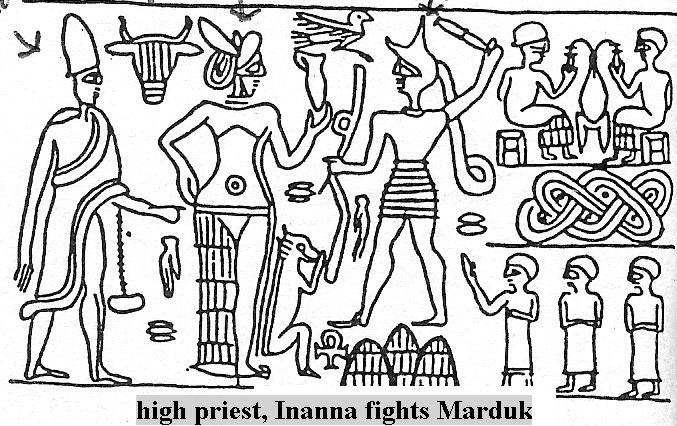
2d - Inanna Wars Against Marduk  (naked goddess Inanna, Goddess of Love & War)

1. To the goddess Ninni (Inanna),
2. the mistress of the world,
3. to his lady,
4
. Gudea
5. the architect (?),
6. the patesi
7. Of Shirpurla,

8. who the temple of E-ninnû
9. of the god
Nin-girsu
10. has constructed.

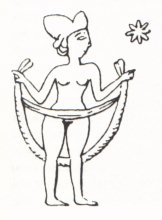
1a - Inanna, 8-pointed star symbolizing Venus 1h - nude Inanna in cape (Inanna, Goddess of Love with her 8-Pointed Star symbol of Venus, spouse to many semi-divine kings)
11. After that the goddess
Ninni (Inanna)
I2. her favorable regard
13. had cast upon him,
14.
Gudea,
15. the patesi
16. Of Shirpurla,
17. a man endowed with large understanding,
18. a servant to his mistress
19. devoted,
20. to make the tablet-like amulets (?)
21. has ordered (?);
22. of the ka-al
23. he has caused the splendor to shine.

COLUMN III

1. His clay (for the construction of the temple) in a pure place
2. he has caused to be taken;

3. his bricks
4. in a holy place
5. he has caused to be molded.
6. Its site (?)
7. he has cleaned and leveled (?);
8. its foundation (?)
9. in the …
10. he has firmly established (?).

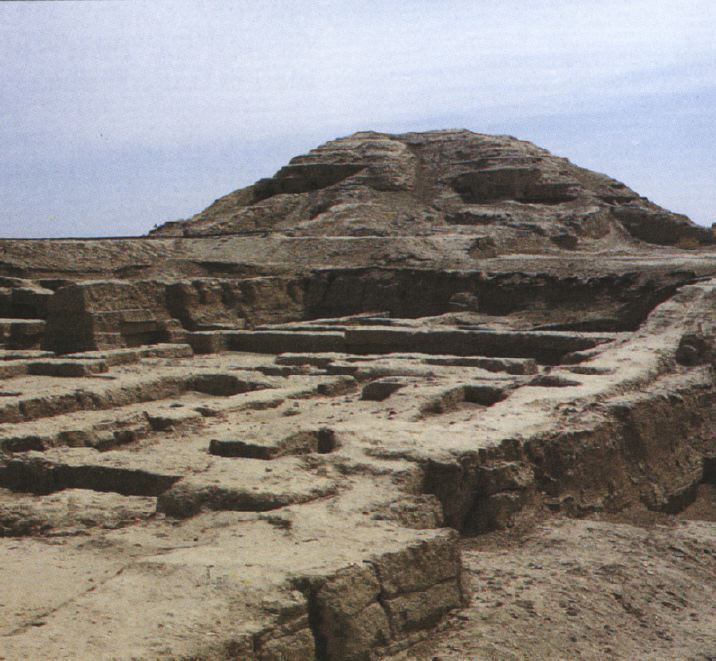
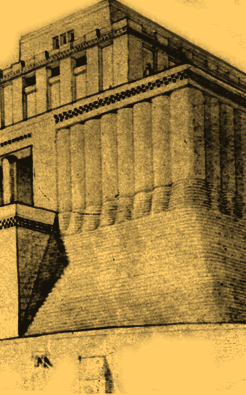
2b - Uruk's Excavation (E-anna ziggurat way above Uruk city below, all mud brick!)
11.
The favorite temple (of the goddess),
12. the temple of E-anna in
Girsu-ki (name for Uruk temple),
13. he has built.
14. From the mountains of the land of
Mâgan
15. a rare stone he has imported;

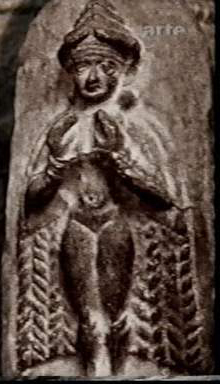
1 - Inanna, goddess of love  (Inanna, spoiled, favored descendant to King Anu)
16. for her statue
17. he has caused it to be cut.
18. “Of
Gudea,
19. the builder of the temple

COLUMN IV

           1. may she prolong the life!”
         2. by this name he has named it (i.e. the statue),
         3. and in the temple of E-anna
         4. he has placed it.
         5. Whoever from the temple of E-anna
         6. shall remove it,
         7. shall break it,
         8. (or) shall efface its inscription,
         9. may the goddess
Ninni (Inanna),
        
10. the mistress
of the world,
         11. from top to bottom1
         12. overthrow him!
         13. Of his throne established
         14. the foundations
         15. may she not maintain!
         16. may she annihilate his race!
         17. may she cut off the years of his reign!

No. 4.—Inscription on Statue D of the Louvre.2

Cartouche on the right shoulder.

(gods in bluemixed-breed demigods in teal…)

1. Gudea,
2. the patesi
3. Of Shirpurla.

COLUMN I

5a - Ninurta with missile weapon (warrior god Ninurta riding his winged lion-headed beast)

1. To the god Nin-girsu,
2. the powerful warrior (son)

1ae - Enlil, Babylonian (Earth Colony Commander Enlil)
3. of the god
Ellilla (Enlil),
4. to his king,
5
. Gudea,
6. the patesi
7. Of
Shirpurla,
8. the architect (?)
9. the constructor of the (sacred) bark

10. of the god Ellilla (Enlil),
11. the shepherd chosen by the immutable will
12. of the god
Nin-girsu,
13. the powerful minister
14. of the goddess
Ninâ (Enki & Ninhursag‘s daughter),
15. covered with renown
16. by the goddess
Bau,
17. the offspring begotten
18. by the goddess
Gatumdug (Ninsun),
19. endowed with sovereignty and the scepter supreme

COLUMN II

1. by the god Gal-alim (Ninurta‘s son Igalim),
2. proclaimed afar among living creatures
3. by the god
Dun-shagâna (unidentified?),
4. the governor
5. who loves his city,
6. (who) has made dedicatory (?) inscriptions,
7. (and who)
his temple of E-ninnû, which illumines the darkness,
8. has constructed.
9. In the interior (of the temple) his favorite gigunû
1
10. he has made for him of cedar-wood.
11. The temple of
E-ghud, his temple in 7 stages (7-step ziggurats),
12. he has constructed.
13. In this temple the offerings
14. of the goddess
Bau

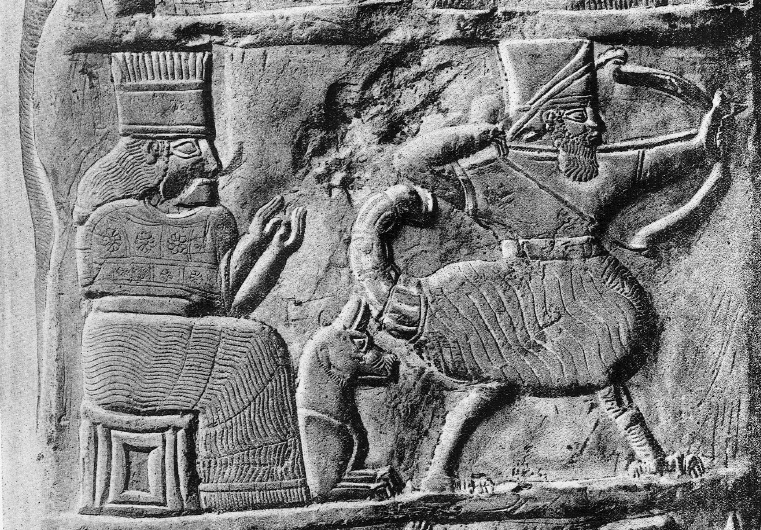
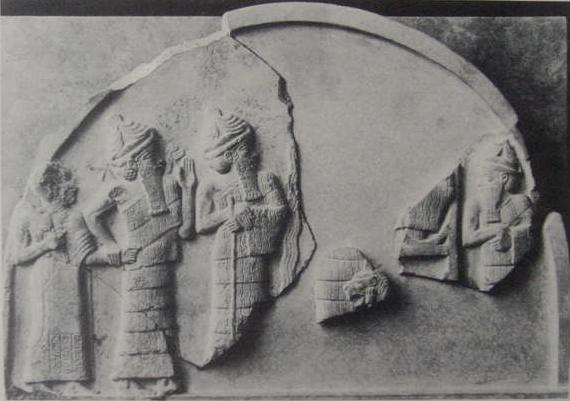
2a - Bau, her dog, & spouse Ninurta2 - Bau-Gula, spouse to Ninurta & mother to Ninsun (Bau & Ninurta)

COLUMN III

1. his lady
2. he has regulated.
3. His favorite bark …
4. named Kar-nun-ta-êa
2
5. he has caused to be made;
6. on the Kar-zagin-kâ-surra
3

7. he has placed it.
8. The crew of this bark …
9. and its captain

10. he has organized.
11. The temple of his lord
12. to the summit he has raised (?).

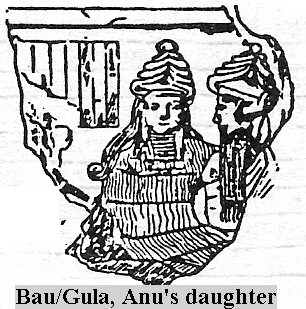
1b - Bau, Gula - Ninurta's spouse, Anu's daughter  (Royal Princess Bau & nephew-spouse Ninurta)
13.
For the goddess Bau,
14. the good lady,
15. the daughter of
Anna (Anu),
16. for his lady
17. her temple of
Uru-azagga

COLUMN IV

1. he has constructed.
2. By the power of the goddess
Ninâ (Enki & Ninhursag‘s daughter),
3. by the power of the god Nin-girsu (Ninurta),
4. to Gudea
5. who has endowed with the scepter
6. the god
Nin-girsu,
7. the country of Mâgan,1
8. the country of
Melughgha,
9. the country of
Gubi,2
10. and the country of
Nituk,3
11. which possess every kind of tree,
12. vessels laden with trees of all sorts
13. into
Shirpurla
(Lagash)
14. have sent.
15. From the mountains of the land of
Mâgan
16. a rare stone he has caused to come;
17. for his statue\

COLUMN V

1. he has caused it to be cut.
2. “O king, for the force immense which
3. no country can resist (?),
4. O god
Nin-girsu,
5. for Gudea

6. the builder of the temple
7. appoint a prosperous fate!”
8. by this name he has named (the statue),
9. (and) in the temple of E-ninnu
10. he has placed it.

No. 5.—Inscription on Statue E of the Louvre.

Cartouche on the right shoulder.


(gods in bluemixed-breed demigods in teal…)

8c - Gudea, son of Ninsun & Lugulbanda8h - Gudea, Ningishzidda, Dumuzi, Enki missing (Gudea; Gudea, Ningishzidda, & Dumuzi)

1. Gudea,
2. the patesi
3. of Shirpurla.

COLUMN I

1. To the goddess Bau,
2. the good lady,

 (Anu, King of the one-world-order planet Nibiru, & their Earth Colony)
3. the daughter of
Anna,
4. the mistress of Uru-azagga,
5. the mistress of abundance,
6. the lady who fixes the destinies of Girsu-ki,

1d - Bau, spouse to Ninurta 1dd - Bau, administer of prisons (Anu‘s daughter Bau)
7. the lady who judges her city,
8. the lady beloved of mortals (?),
9. the lady of death (?),
10. to his lady,
11.
Gudea
12. the patesi
13. of Shirpurla,
14. who (the temple) of E-ninnû
15. of the god
Nin-girsu
16. has constructed.
17. After that the goddess
Bau
18. his mistress
19. in her august heart had chosen him

COLUMN II

1. as a servant full of reverential fear,
2. for his mistress
3. the greatness of his mistress
4. he has proclaimed,

5. (and) in his clear intelligence (?)
6. to the goddess
Bau
7. his lady
8. has entrusted himself.
9. As the temple of E-ninnû,
10. the favorite temple

2d - Bau & brother Enlil

       (Ninurta in beast skin, Bau seated, & her 1/2 brother Enlil, father to Ninurta)
11. of the god
Nin-girsu
12. his king
13. he had constructed,
14. so for the goddess
Bau
15. the daughter of Anna
16. the mistress of Uru-azagga,
17. his mistress,
18. the temple of
E-sil-sirsira,
19. her favorite temple,
20. he has constructed;
21. the city he has cleansed (?),
22. and leveled (?);

COLUMN III

1. to make tablet-like amulets (?)
2. he has given orders (?);
3. of the ka-al
4. he has caused the splendor to shine.
5. Its clay (for the construction of the temple) in a pure p
lace
6. he has caused to be taken;
7. its bricks in a holy place
8. he has caused to be molded.
9. The brick-like amulets (?) he has caused to be made;
10. the dedicatory inscriptions he has composed (?).
1
11. Its site he has cleansed (?)
12. and leveled (?);
13. its foundations (?)
14. in the …
15. he has firmly established (?).

3 - Bau & her spouse Ninurta  (Bau & nephew-spouse Ninurta)

16. For the goddess Bau,
17. his mistress,
18. the mistress who
Uru-azagga
19. directs,
20. in
Uru-azagga,

COLUMN IV

1. in a pure place,
2. he has built the temple.
3. The holy throne
4. of his divinity
5. he has made;
6. in the place of her oracles
7. he has installed it.
8. Her sacred altar (?)

9. he has made;
10. in her sanctuary
11. he has placed it.
12. The tabernacle (?) (called)
Nin-an-dagal-ki1
13. he has made;
14. in her sanctuary
15. he has installed it.

COLUMN V

1. At the commencement of the year,
2. the festival of the goddess
Bau
3. when offerings are made to her,—
4. 1 ox she,2
5. 1 sheep ni,
3
6. 3 sheep she,
7. 6 sheep ush,
4
8. 2 lambs,
9. 7 pat of dates,
10. 7 shab of cream,
11. 7 shoots of a palm,

12. 7 … ,
13. 7 …,
14. 1 bird …,
15. 7 swans,

16. 15 cranes,
17. 1 bird (?) …
18. with its 15 eggs (?),
19. 1 tortoise (?)
20. with its 30 eggs (?),
21. 30 garments of wool,
22. 7 garments of …,

COLUMN VI

1. 1 garment of …,
2. (such were) the offerings of the goddess
Bau
3. in the ancient temple
4. on that day.

8q - Ninsun, Gudea, Inanna, & Ningishzidda (Ninsun, her son Gudea, & Ningishzidda)
5.
Gudea,
6. the patesi
7. of Shirpurla,
8. after that for the god
Nin-girsu
9. his king
10. his favorite temple,
I1. the temple of E-ninnû,
12. he had constructed,

1d - Bau, spouse to Ninurta 8g - King Gudea of Lagash (Bau & Gudea)
13. (and after that)
for the goddess Bau
14. his mistress
15. her favorite temple,
16. the temple of
E-sil-sirsira,

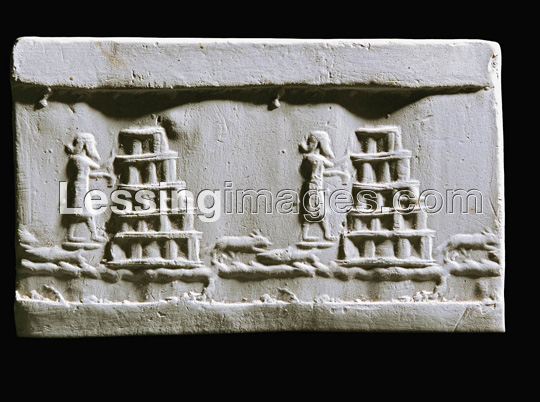
Imprint of a cylindrical seal showing a ziggurat and a priest or god. From Babylon.  (alien giant ziggurat houses built by the gods, then by earthlings)

17. he had constructed,—
18. 2 oxen she,
19. 2 sheep ni,
20. 10 sheep she,
21. 2 lambs,
22. 7 pat of dates,
23. 7 shab of cream,
24. 7 shoots of a palm,
25. 7 …,

COLUMN VII

1. 7 …
2. 14 …
3.14 …,
4. 1 bird …,
5. 7 swans,
6. 15 cranes,
7. 7 birds…,
8. 1 bird (?)…
9. with its 15 eggs (?),
10. 1 tortoise (?)
11. with its 30 eggs (?),
12. 40 garments of wool,
13. 7 garments of …,
14. 1 garment of …,
15. (such are) the offerings to the goddess
Bau,
16. which in the new temple
17.
Gudea,
18. the patesi
19. Of Shirpurla,

2ba - Enlil leads Ur-Nammu to repair his home  (Enlil leads semi-divine king & earthling to repair ziggurats)
20. the builder of the temple
21. has added.
22. The temple of the goddess
Bau
23. having been restored,
24. its prosperity

COLUMN VIII

1. having been assured;
2. of the throne of Shirpurla
(Lagash)
3. the foundation having been strengthened;
4. for
Gudea,
5. the patesi
6. of Shirpurla,
7. the scepter of command
8. having been placed in the hand;
9. of his life
10.
the days having been prolonged;
11. (then) his god

4aa - Enki, Ningishzidda, & earthling (Enki, Ningishzidda, Gudea, & unidentified)
12.
Nin-gish-zida (Enki‘s & Ereshkigal‘s son)

13. and the goddess Bau
14. into his temple of Uru-azagga
15. he has introduced.
16. In that year
17. from the mountains of the land of
Mâgan
18. he has caused a rare stone to be brought;
19. for his statue
20. he has caused it to be cut.

COLUMN IX

          1. O my mistress …
          2. ……
          3. ……!”
          4. by this name he has named (the statue),
          5. and in the temple he has placed it.
          6. (This) statue
          7. of the man who the temple of the goddess
Bau
          8. has constructed,
          9. let no one from the place of its installation
          10. remove it!
          11. His prescriptions
          12. let no one transgress!

No. 6.—Inscription on Statue F of the Louvre 1

Cartouche on right shoulder.


(gods in bluemixed-breed demigods in teal…)

8d - Gudea as high-priest of Lagash (Gudea, son to Ninsun, leader of Lagash 2,144 B.C.)

1. Gudea,
2. the patesi
3. of Shirpurla,
4. the man of the goddess
Gatumdug (Ninsun).

COLUMN I

2a - Ninsun, mother of Gods & Mixed-Breed Kings (Ninsun, mother goddess to Gudea)

1. To the goddess Gatumdug (Ninsun),
2. the mother of Shirpurla,
3.
Gudea
4. the patesi
5. of Shirpurla,

2 - Ninsun, mother to mixed-breed kings  (Ninsun, mother to alien gods, & many earthling mixed-breeds appointed to kingships)

6. the man of the goddess Gatumdug (Ninsun, Ninurta‘s daughter),
7. thy favorite servant,
8. who has made the dedicatory (?) inscriptions,
9. (and) the temple of E-ninnû which illuminates the darkness (?),
10. (the temple) of the god
Nin-girsu
11. (who) has constructed,
12. the goddess
Gatumdug (Ninsun, Gudea’s mother)
13. his lady,
14. who in Shirpurla,
15. her favorite city,
16. for the supreme rank (?)

COLUMN II

1. has created him,
2. the temple of the goddess
Gatumdug (Ninsun, Bau & Ninurta‘s daughter)
3. his lady
4. to construct
5. has given him the order.
6.
Gudea
7. the patesi
8. of Shirpurla,
9. a man endowed with large intelligence,
10. a servant filled with reverential fear
11. for his mistress,
12. to make tablet-like amulets (?)
13. has commanded (?);
14. of the ka-al
15. he has caused the splendor to shine.
16. The clay (for the construction of the temple) in a pure place
17. he has caused to be taken;
18. its bricks in a holy place

19. he has caused to be molded.

COLUMN III

1. Its site he has cleansed (?)
2. and leveled (?);
3. its foundation (?)

4. in the …
5. he has firmly established (?).
6. In
Uru-azagga, in a pure place,
7. he has built the temple.
8. The holy throne of her divinity
9. he has made.
10. Her sacred altar (?)
11. he has made.
12. The oxen il-la
1
13. he has formed into a herd,
14. their herdsman
15. he has established.
16. To the sacred cows
17. he has added sacred calves;
18. their drover
19. he has established.
20. To the sacred sheep
21. he has added sacred lambs;
22. their shepherd
23. he has established.
24. To the sacred she-goats
25. he has added sacred kids;
26. their goatherd
27. he has established.
28. Each herd (?) of dams, whatever be the species,
29. with a herd (?) of younglings in addition
30. he has increased.
31. Their guardian
32. he has established.

No. 7.—Inscription on Statue G of the Louvre


(gods in bluemixed-breed demigods in teal…)

          COLUMN I

1. To the god Nin-girsu,
2. the powerful warrior
3. of the god
Ellilla (Enlil),
4. to his king,

5. Gudea
6. the patesi
7. Of Shirpurla,
8. who the temple of E-ninnû

6l - King Shulgi of Ur, Anzu, & Ninurta  (semi-divine king & Ninurta with winged beast symbol)
9. of the god
Nin-girsu (Gudea‘s grandfather)
10. has constructed,
11. for the god
Nin-girsu
12. his king,
13. the temple of
E-ghud, the temple of the 7 stages,
14. this temple of
E-ghud,
15. from the summit whereof
16. the god
Nin-girsu
17. dispenses favorable fortunes,
18. he has constructed.

COLUMN II

  1.     (1. Besides) the offerings
        2. which in the joy of his heart
    3. to the god
    Nin-girsu

        1c - Gula, Anu's daughter, Ninurta's spouse (Bau, daughter to Anu, spouse to Ninurta)
       
    4. to the goddess Bau,
        5. the daughter of Anna,
       
    6. his favorite wife,
    7. he presented,
    8. for his god

        4da - Gudea, Ningishzidda, Dumuzi, & Enki (Gudea, Ningishzidda, & Dumuzi)

         9. Nin-gish-zida (Enki & Ereshkigal‘s son- in some texts)
         10. he has established others also.
    11. Gudea

         12. the patesi
    13. Of Shirpurla
    14. from Girsu-ki
    15. to Uru-azagga
    16. has proclaimed peace.
    17. In that year,

COLUMN III

1. from the mountains of the country of Mâgan
2. he has caused a rare stone to be brought;
3. for his statue
4. he has caused it to be cut.

Here 10 lines have been left blank, it having been intended to fill them up with the name of the statue.

5. On the day of the commencement of the year,
6. the festival of the goddess
Bau,
7. when the offerings are presented,—
8. 1 ox she
1
9. 1 sheep ni,
2
10. 3 sheep she,

COLUMN IV

1. 6 sheep ush,3
2. 2 lambs,
3. 7 pat of dates,
4. 7 shab of cream,
5. 7 shoots of a palm,
6. 7 ……
7. 7 ……
8. 1 bird ……
9. 7 swans,
10. 15 cranes,
11. 1 bird (?) …
12. with its 15 eggs (?),
13. 1 tortoise (?)
14. with its 30 eggs (?),
15. 30 garments of wool,
16. 7 garments of …
17. 1 garment of …
18. (such were) the offerings to the goddess
Bau
19. in the ancient temple
20. on that day.
21.
Gudea

COLUMN V

1. the patesi
2. of Shirpurla,
3. after that for his god
Nin-girsu
4. his king

5. his favorite temple,
6. the temple of E-ninnû,
7. he had constructed,
8. (and after that) for the goddess
Bau,
9. his mistress,
10. her favorite temple,
11. the temple of
E-sil-sirsira
12. he had constructed,
13. 2 oxen she,
14. 2 sheep ni,
15. 10 sheep she,
16. 2 lambs,
17. 7 pat of dates,
18. 7 shab of cream,
19. 7 shoots of a palm,
20. 7 ……
21. 7 ……
22. 14 ……

COLUMN VI

1. 14 ……
2. 1 bird ……
3. 7 swans,
4. 10 cranes,
5. 7 birds ……
6. 1 bird (?) ……
7. with its 15 eggs (?),
8. 1 tortoise (?)
9. with its 30 eggs (?),
10. 40 garments of wool,
11. 7 garments of …
12. 1 garment of …
13. (such are) the offerings to the goddess
Bau
14. which in the new temple
15
. Gudea
16. the patesi
17. Of
Shirpurla,
18. the constructor of the temple,
19. has added.

No. 8.—Inscription on Statue H of the Louvre


(gods in bluemixed-breed demigods in teal…)

COLUMN I

1b - Bau, Gula - Ninurta's spouse, Anu's daughter  (Princess Bau, daughter to King Anu, & nephew-spouse Ninurta)

1. To the goddess Bau,
2. the good lady,
3. the daughter of Anna,
4. the mistress of Uru-azagga,
5. the mistress of abundance, the daughter of the bright sky,
6. to his mistress
7.
Gudea
8. the patesi
9. of
Shirpurla.

COLUMN II

1. After that the temple of E-sil-sirsira,
2. her favorite temple,

3. the temple which is the marvel of
Uru-azagga
4. he had caused to be constructed,
5. from the mountains of the country of
Mâgan,
6. a rare stone he has caused to be brought;

1d - Bau, spouse to Ninurta 1dd - Bau, administer of prisons  (Bau)
7. for her statue
8. he has caused it to be cut.

COLUMN III

1. O divine daughter, beloved by the bright sky,

2. mother Bau,

3. in the temple of E-sil-sirsira

4. “to Gudea

5. give life!”

6. by this name he has named (the statue),

7. and in the temple of Uru-azagga

8. he has placed it.

Inscription on a stone serving as the threshold of a Door1


(gods in bluemixed-breed demigods in teal…)

1. For the god Nin-girsu,

2. the powerful warrior
3. of the god
Ellilla (Enlil),
4. for his king,
5.
Gudea
6. the patesi
7. of Shirpurla
8. has made the dedicatory inscriptions (?),
9. (and) his temple of E-ninnû, which illumines the darkness,
10. has constructed,
11. and restored.

Inscriptions on two unpublished votive tablets


(gods in bluemixed-breed demigods in teal…)

             1a - Ishtar-Inanna, of royal blood (Inanna, Goddess of War)

1. For the goddess Ninni (Inanna),
2. the mistress of the world,
3. for his mistress,
4.
Gudea
5. the patesi
6. of Shirpurla
7.
her temple of E-anna in Girsu-ki (Uruk)
8. has constructed.

Column II

1. For the god Gal-alim (Ig-alim, Ninurta‘s son),
2. the favorite son

  (Ninurta / Ningirsu & spouse Bau)
3. of the god Nin-girsu,
4. for his king,
5. Gudea
6. the patesi
7. of Shirpurla
8.
his temple of E-me-ghush-gal-an-ki
9. has constructed
.

Unpublished Inscription on a Brick


(gods in bluemixed-breed demigods in teal…)

1. For the god Nin-girsu,
2. the powerful warrior

3. of the god Ellilla (Enlil),
4. for his king,
5.
Gudea
6. the patesi
7. of Shirpurla
8.
his temple of Eninnû, which illumines the darkness (?) (alien technologies),
9. has constructed.
10. In the interior of this temple, a sanctuary of cedar wood,
11. the place of his oracles,
12. he has constructed for him.

Inscription on a Brick1


(gods in bluemixed-breed demigods in teal…)

1. For the goddess Ninâ (Enki& Ninhursag‘s daughter),
2. the lady of destinies (?),
3. the lady of oracles (?),
4. for his lady,
5.
Gudea
6. the patesi
7. of
Shirpurla
8. has made the dedicatory inscriptions (?).

Imprint of a cylindrical seal showing a ziggurat and a priest or god. From Babylon.  (ziggurat residences of the giant alien gods)

9. In Ninâ-ki, her favorite city,
10. her temple of
E-ud-mâ-Ninâ-ki-tag2
11. which rises from the Kur-ê
3
12. he has constructed.


Footnotes

75:2 The Sinaitic Peninsula.

76:1 The first column has been translated by Dr. Oppert: Communications à l’Académie des Inscriptions et Belles-Lettres, March 1882.

78:1 I give the translation of the lines which follow, as far as col. v. 1. 4, inclusively, only with the greatest reserve.

78:2 The kalû were a class of priests.

79:1 That is, a court of justice.

79:2 That is, the Persian gulf.

79:3 Evidently Amanus in northern Syria.

79:4 The Assyrian urkarinnu. For its explanation see an article by the Rev. C. J. Ball, Proceedings of the Society of Biblical Archæology, xi. p. 143.

80:1 Dr. Hommel has proposed to read this name Dalla. I should prefer to read Tilla, explained by Urdhu in W. A. I., ii. 48, 13.

80:2 It is the tree called ashûhu by the Assyrians.

80:3 The reading is uncertain. Dr. Hommel reads Kasalla, comparing the Kazalla of W. A. I., iv. 34. 31, 33.

80:4 Phœnicia.

81:1 Identified by Dr. Hommel, with much probability, with Tidnu or “the West” (Syria and Canaan); W. A. I., ii. 48, 12, etc.

81:2 Or a “city of Abullât,” or perhaps the city “Abullu-abishu,” W. A. I., ii. 52. 55.

81:3 Perhaps “the land of Mash” or Arabia Petræa, the Mash of Gen. x. 23. From Ki-mas was derived the Assyrian kêmassi, “copper” (W. A. I., ii. 18, 54; iv. 28, 13).

81:4 In the vicinity of the Sinaitic Peninsula.

81:5 The tree called ushu by the Assyrians.

81:6 If this line is not due to an error, the engraver must have omitted something between lines 27 and 28.

81:7 Perhaps Kilzanim is the name of a country. In this case, the engraver must have made some omission here.

82:1 [“Temple of the West.”—Ed.].

82:2 The tree called huluppu in Assyrian. [The Sumerian name may be read ghalup, of which huluppu would be an Assyrian modification.—Ed.]

83:1 [The Sinaitic Peninsula and Midian.]

87:1 Partially translated by Dr. Hommel: Die Vorsemitischen Kulturen, p. 460.

89:1 Literally “his head in his foundations.”

89:2 Découvertes, pl. 9. Translated by Dr. Oppert in a Communication à l’Académie des Inscriptions, June 23d 1882.

90:1 [Perhaps related to gâgunû, “a field.”—Ed.]

90:2 [I should render: “the quay which comes forth from the lord.”—Ed.]

90:3 Perhaps the name of a canal. [I should translate it: “the quay which runs from the white stone of the gate.”—Ed.]

91:1 [The Sinaitic Peninsula.]

91:2 Perhaps Coptos in Egypt.

91:3 The Tilmun of the Assyrians, in the Persian Gulf.

93:1 Perhaps the foundation-cylinders and clay cones with dedicatory inscriptions.

94:1 [“The lady of the place of the maternal deity.”—Ed.]

94:2 [“Young?”—Ed.]

94:3 [“Fat?”—Ed.]

94:4 [“Male?”—Ed.]

97:1 Découvertes, pl. 14.

99:1 See W. A. I., i. 66, iii. 9.

101:1 [“Young”?—Ed.]

101:2 [“Fat”?—Ed.]

101:3 [“Male”?—Ed.]

103:1 Découvertes, pl. 27, No. 3.

105:1 Découvertes, pl. 37, No. 3. See the inscription on a cone supposed to come from Zerghul (W. A. I. i. 5, No. xxiii. 2). The attributes in lines 2 and 3 of the cone oblige us to restore dingir Ninâ, “the goddess Ninâ (Enki’s daughter),” in the first line.

105:2 [“The house of light which illuminates the ship of Ninâ-ki.”—Ed.]

105:3 [“The mountain of the temple.”—Ed.]

King Gudea Quotes From Sitchin Books

SEE SITCHIN’S EARTH CHRONICLES


(Texts: All Artifacts, Color Coding, & Writings in Bold Type With Italics Inside Parenthesis, are Added by Editor R. Brown, not the Authors, Translators, or Publishers!)

(gods in bluemixed-breed demigods in teal...)


According to Gudea’s inscriptions, “the Lord of Girsu ”appeared unto him in a vision, standing beside his “Divine Black Bird”. The god expressed to him the wish that a new E.NINNU (“House of Fifty”)–also Ninurta’s numerical rank, be built by Gudea.


Gudea was given two sets of divine instructions: one from a goddess who in one hand

         “held the tablet of the favorable star of heavens…”
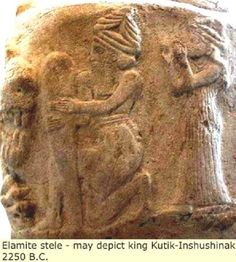
 

and with the other

         “held a holy stylus…”
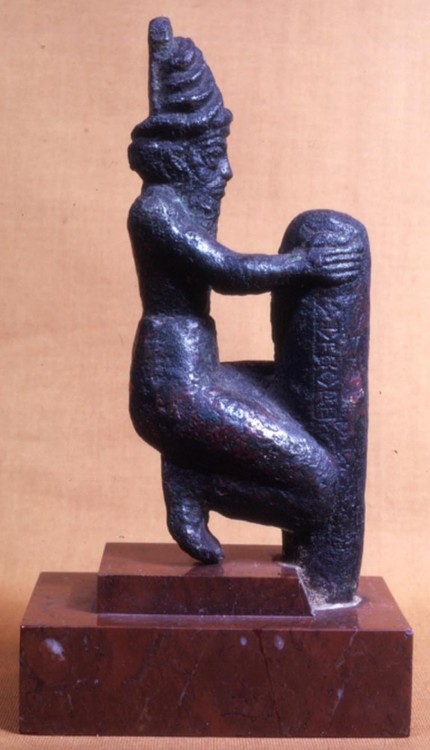
 

with which she indicated to Gudea “the favorable planet” in whose direction the temple should be oriented.


The other set of instructions came from a god that Gudea did not recognize…Ningishzidda. He handed to Gudea a tablet made of precious stone

         “the plan of a temple it contained…”
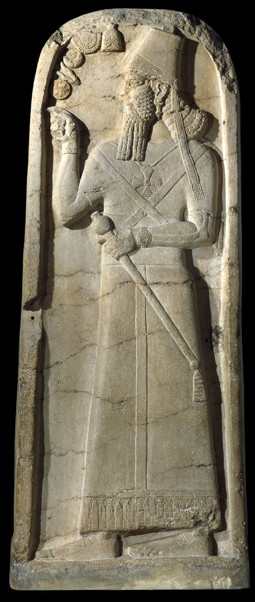
 

Ningishzidda...knew how to secure the foundations of the temples; he was

         “the great god who held the plans…”
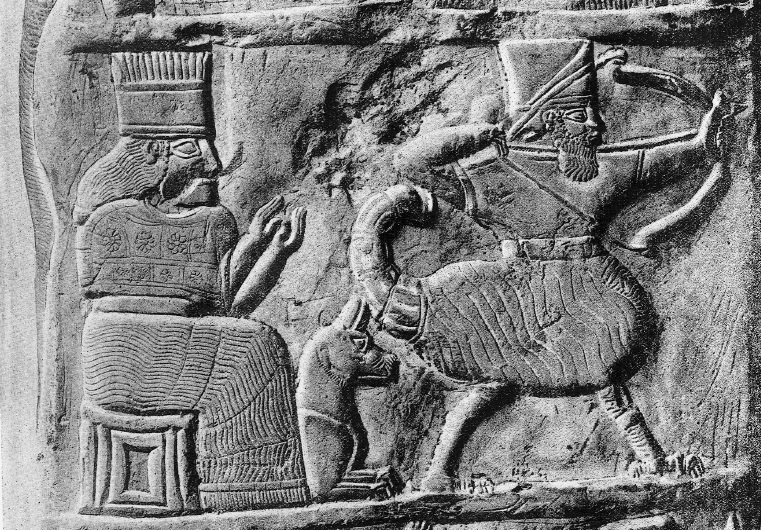
         “a god called forth from obscurity in Gudea’s time,…”


only to become a “phantom god” and a mere memory in later (Babylonian and Assyrian) times.

———————————————————————————————————-

King Ur-Bau Quotes From Texts

(Texts: All Artifacts, Color Coding, & Writings in Bold Type With Italics Inside Parenthesis, are Added by Editor R. Brown, not the Authors, Translators, or Publishers!)

(gods in bluemixed-breed demigods in teal…)


      “Ur- Bau the son of En- Enlile-ki-aj: he acted for 900 years. …”

    Ur-Bau the patesi of Shirpurla-ki,

       the offspring begotten by the god Nin-âgal (Enki’s son),

       chosen by the immutable will of the goddess Niná (Enki’s daughter),

       endowed with power by the god Nin-girsu (Ninurta),

      named with a favorable name by the goddess Bau (Gula),

       endowed with intelligence by the god En-ki,

       covered with renown by the goddess Ninni (Inanna?),

       the favorite servant of the god who is king of Gishgalla-ki,

       the favorite of the goddess Duzi-abzu (Geshtinanna).

       “I am Ur-Bau; the god Nin-girsu is my king…”

Inscriptions of Ur-Bau

Records of the Past, 2nd series, Vol. I, ed. by A. H. Sayce, [1888], at sacred-texts.com

(Texts: All Artifacts, Color Coding, & Writings in Bold Type With Italics Inside Parenthesis, are Added by Editor R. Brown, not the Authors, Translators, or Publishers!)

(gods in bluemixed-breed demigods in teal…)

No. 2.—On the Stone of a Threshold

2a - Enki keeper of the MUs-knowledge disks (Enki, King Anu’s eldest & wisest son on Earth Colony, 1st to arrive with a crew of 50)

         1. For the god En-ki,
        
2. his king,
        
3. Ur-Bau (Ninagal’s mixed-breed son-king named after giant alien goddess Bau),
        
4. the patesi
         5. Of
Shirpurla (Lagash),
        
6. the offspring begotten
        
7. by the god Nin-âgal (Enki’s son),
        
8. his temple
         9. has constructed.”

No 3.—On large Bricks

2e - Ninurta Sphynx in his city, Lagash (Ninurta sphynx, artefact unearthed within Lagas ruins)

1. “For the god Nin-girsu (Ninurta),
2. the powerful warrior (royal son & heir to father Enlil)

2 - Enlil, chief god of All On Earth (Enlil, King Anu’s son & heir, Earth Colony Commander)
3. of the god
Ellilla (Enlil),
4.
Ur-bau
5. the patesi (high-priest / king)
6. Of
Shirpurla (Lagash, Ninurta’s patron city)
7. his temple
8. has constructed.

No. 4.—On a Small Round Object of White Stone

1d - Bau, spouse to Ninurta (Princess Bau, King Anu’s daughter, aunt to Ninurta, & his spouse)

1.”For the goddess Bau (Gula)
2. the daughter of Anna (Anu),

3. for the life
4. of
Ur-bau
5. the patesi
6. Of
Shirpurla,
7. Ur-Ellilla has brought this da;
8. and for the life of the wife of his son
9. he has consecrated it.

7c - Ur-Bau tablet (Ur-Bau tablet, over 2,000 B.C.)

VI. Inscriptions of Ur-Bau and his Reign

Records of the Past, 2nd series, Vol. I, ed. by A. H. Sayce, [1888], at sacred-texts.com

(Any writing in Bold Type, in Parenthesis, in Italics, & pictures are added by me, R. Brown, not the author!)

(gods in bluemixed-breed demigods in teal…)

No. I.—On a Statue

COLUMN I

5 - Ninurta's flying Divine Storm Bird2bb - Ninurta, Enlil's heir to Nibiru & Earth Colony

                                                                      (Ninurta’s weaponized sky-disc / storm bird;                                              Ninurta)

        1. To the god Nin-girsu (Ninurta)
       
2. the powerful warrior
        3. of the god
Ellilla (Enlil),
       
4. Ur-Bau (mixed-breed giant appointed to kingship)
        5. the patesi
        6. of Shirpurla-ki (Lagash),
        7. the offspring begotten
        8. by the god
Nin-âgal (Enki’s son),
        9. chosen by the immutable will of the goddess
Niná (Enki’s daughter),

         2a - Bau, her dog, & spouse Ninurta  (Bau & her spouse Ninurta)
       
10. endowed with power by the god Nin-girsu,
       
11. named with a favorable name by the goddess Bau (Gula),
       
12. endowed with intelligence by the god En-ki,

COLUMN II

         1. covered with renown by the goddess Ninni (Inanna?),
        
2. the favorite servant of the god who is king of Gishgalla-ki,
         3. the favorite of the goddess
Duzi-abzu (Geshtinanna, Enki & Ninsun’s daughter).
        
4. I am Ur-Bau (mixed-breed son of Ninagal);
        
5. the god Nin-girsu is my king.
         6. The site of … he has excavated.
         7. The earth thence extracted, like precious stones, he has measured (?);
         8. like a precious metal he has weighed (?) it.

COLUMN III

         1. According to the plan adopted he has marked out a large space;
         2. into the middle (of it) he has carried this earth,
         3. and he has made its mundus.
         4. Above, a substructure 6 cubits high, he has built.
         5. Above this substructure
         6. the temple
E-ninnû, which illumines the darkness (?), 30 cubits in height,
         7. he has built.

           2a - Ninhursag, Ninmah, Nintu, etcHathorix capital. Limestone, bas-relief from Paphos, Cyprus 80 x 44 x 24 cm AM 2755 (Ninurta’s mother Ninhursag, eldest daughter to King Anu)

         8. For the goddess Nin-gharsag (Ninhursag), the mother of the gods,

COLUMN IV

1. her temple of Girsu-ki
2. he has constructed.

1da - Bau-Gula, administer of prisonsFragment of a stele with bust of the goddess Ba'u. Period of king Gudea, around 2100 BCE. From Tello. Limestone, H: 16,2 cm AO 4572 (Bau, Anu’s powerful princess daughter)

3. For the goddess Bau,
4. the good lady,
5. the daughter of
Anna (Anu),
6. her temple of Uru-azagga
7. he has constructed.
8. For the goddess
Ninni (Inanna?), the lady august, the sovereign (?),
9. her temple of
Gishgalla-ki
10. he has constructed.

2ba - Enki's Temple-Ziggourat in Eridu 2e - Eridu temple reconstruction2aa - Enki, found in Sin's temple at Khorsabad 

   (Enki’s patron city Eridu ruins; Enki’s ziggurat / residence / temple in Eridu; Enki)
11. For the god
En-ki, the king of Eridu,
12. his temple of
Girsu-ki

COLUMN V

1. he has constructed.
2.
For the god Nin-dara (Nanshe’s husband), the lord of destinies (?),
3. his temple he has constructed.
4. For the god
Nin-âgal (Enki’s son),

         5. his god,
         6. his temple
         7. he has constructed.
         8. For the goddess
Nin-mar-ki (Enki & Nina’s daughter)
        
9. the good lady,
        
10. the eldest daughter of the goddess
Niná (Enki & Ninhursag’s daughter via Uttu),
        
11. the Esh-gu-tur (?), the temple of her constant choice,
         12. he has constructed.

COLUMN VI

1. For the god …
2. the shepherd … [of]
Gir-[su-ki],
3. his temple …
4. he has constructed.
5.
For the goddess Kû-Anna (unidentified?),
6. the lady of the cloudy sky (?),
7. her temple of
Girsu-ki
8. he has constructed.
9.
For the goddess Duzi-abzu (Geshtinanna, Enki & Ninsun’s daughter),
10. the lady of Kinunir-ki,
11. her temple of
Girsu-ki
12. he has constructed.